head

Friday, December 28, 2012

Preparations at Chickasaw Bayou

Having set out from Memphis, Tennessee with fifty transports on December 20th, Sherman's army was landed just ten miles north of the Confederate stronghold at Vicksburg on December 24th. However, the path into Vicksburg would not be easy. Between the Yankees and the town was very treacherous terrain, with bayous running at the foot of the high bluffs of the Walnut Hills, where the Confederate defenders would make their stand.
Steele

There was much confusion in the Union army as the troops landed. As the main army prepared to make an attack Sherman sent two brigades on December 26th to make a reconnaissance and check for weak spots in the Confederate line. Then 150 years ago today, on December 28th, Brigadier General Frederick Steele's division was sent to try to turn the Confederate right. But they advanced on a narrow front, and were driven back by Confederate artillery fire. However, undeterred by this reverse, Sherman decided to continue with plans for the attack the next day. As he said, "We will lose 5,000 men before we take Vicksburg, and may as well lose them here as anywhere else.”

JEB Stuart Tricks the Yankees

JEB Stuart
Several weeks after defeating Burnside in the bloody Battle of Fredericksburg, Robert E. Lee ordered his cavalry commander, J. E. B. Stuart, to make a raid north across Union lines. He ordered him to "penetrate the enemy's rear, ascertain if possible his position & movements, & inflict upon him such damage as circumstances will permit." He set off with just less than 2,000 troopers and wreaked havoc in the Union rear, capturing 250 prisoners with their horses, wagons and supplies.

Along the way he played a memorable prank on the Union forces. Reaching a telegraph line, he had his telegraph operator tap the line, and began sending messages to confuse the Union forces. He also received valuable information regarding the Union's plans to capture him. When it was time to be moving on, he sent one final message to Montgomery C. Meigs at the War Department: “General Meigs will in the future please furnish better mules; those you have furnished recently are very inferior. J.E.B. Stuart.” With this done, he cut the telegraph lines and went on his way.

Thursday, December 20, 2012

Sherman Heads to Vicksburg

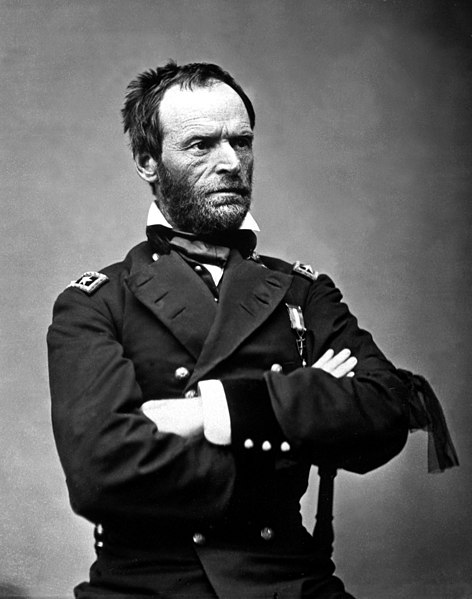
Sherman
While Van Dorn and Forrest were raiding Union supply lines, William Sherman was beginning the very movement they were trying to stop. On October 19th Abraham Lincoln had appointed John McClernand to command a new army to attempt to take Vicksburg. This worried Grant, who planned for the capture of that Confederate stronghold to be his next mission. Spurred to action by this threat to his command, he moved quickly, and ordered his trusted subordinate William Sherman to move down the Mississippi River to Vicksburg while Grant converged with him, marching overland.
US transport on the Mississippi
It was 150 years ago today that Sherman boarded a transport in Memphis, Tennesse and set out down river, beginning this new campaign. That say he wrote to his brother, Senator John Sherman, saying:
Dear Brother:

I embarked to-day on the Forest Queen and will have 20,000 men in boats by noon and be off for the real South. At Helena I will get about 12,000 more. Like most of our boasts of the “Myriads of the northwest sweeping away to the Gulf,” “breaking the back bone,” &c. &c., the great Mississippi expedition will be 32,000 men. Vicksburg is well fortified and is within telegraphic and railroad reach of Meridian, Mobile, Camp Moore and Grenada, where Pemberton has 30,000 to 35,000 men. Therefore don't expect me to achieve miracles. Vicksburg is not the only thing to be done. Grant is at Coffeeville! (?) with say 40,000 men. He expected me to have the same but they are not here. We can get the Yazoo, can front in any and every direction and can take Vicksburg, clean out the Yazoo, capture or destroy the fleet of enemy's gunboats and transports concealed up about Yazoo city — and do many other useful things. Blair is down at Helena and will doubtless form a part of the expedition. He will have a chance of catching the Elephant by the tail and get a good lift.

Of course the pressure of this force acting in concert with Grant must produce good results. Even if we don't open the Mississippi, by the way an event not so important as at first sight, until the great armies of the enemy are defeated — we are progressing. I wish Burnside and Rosecrans were getting along faster, but I suppose they encounter the same troubles we all do. . . .

I rise at 3 A.M. to finish up necessary business and as usual write in haste. . . .  I am very popular with the people here and officers and indeed with all my men. I don’t seek popularity with the “sneaks and absentees” or the “Dear People.” . . .

Affectionately,

W. T. SHERMAN.

John Sherman

Van Dorn Captures Holly Springs

Earl Van Dorn
In December, 1862 the Confederates in the Western Theater embarked on an all out cavalry attempt to cut Union supply lines. The Union forces under Grant were preparing to move on Vicksburg, the last remaining Confederate stronghold on the Mississippi River. These cavalry raids were to try to bring him to a halt for lack of supplies to feed his army. Nathan Bedford Forrest had set out on another of his famous raids on December 10th, defeating Union forces in the Battle of Lexington, Tennessee. With Forrest still on the prowl more Confederates would set out under the command of Earl Van Dorn.
Civil War view of Holly Springs, Mississippi

Van Dorn had performed badly as an army commander in the Battles of Pea Ridge and Second Corinth, and although he was acquitted by a court of inquiry, he was demoted back to a cavalry commander. Back in his element, he set out with 3,500 troopers on December 18th and just two days later on December 20th, 150 years ago today, he struck the Union supply depot at Holly Springs. There he captured or destroyed over $1 million worth of supplies, and captured the 1,500 Yankees who had been assigned to guard them. In the next days he would attempt to move north into Tennessee, but meeting Union opposition at Davis Mill would return to his starting point on December 28th, having accomplished a very useful raid for the Confederacy.

Tuesday, December 18, 2012

Battle of Lexington, Tennessee


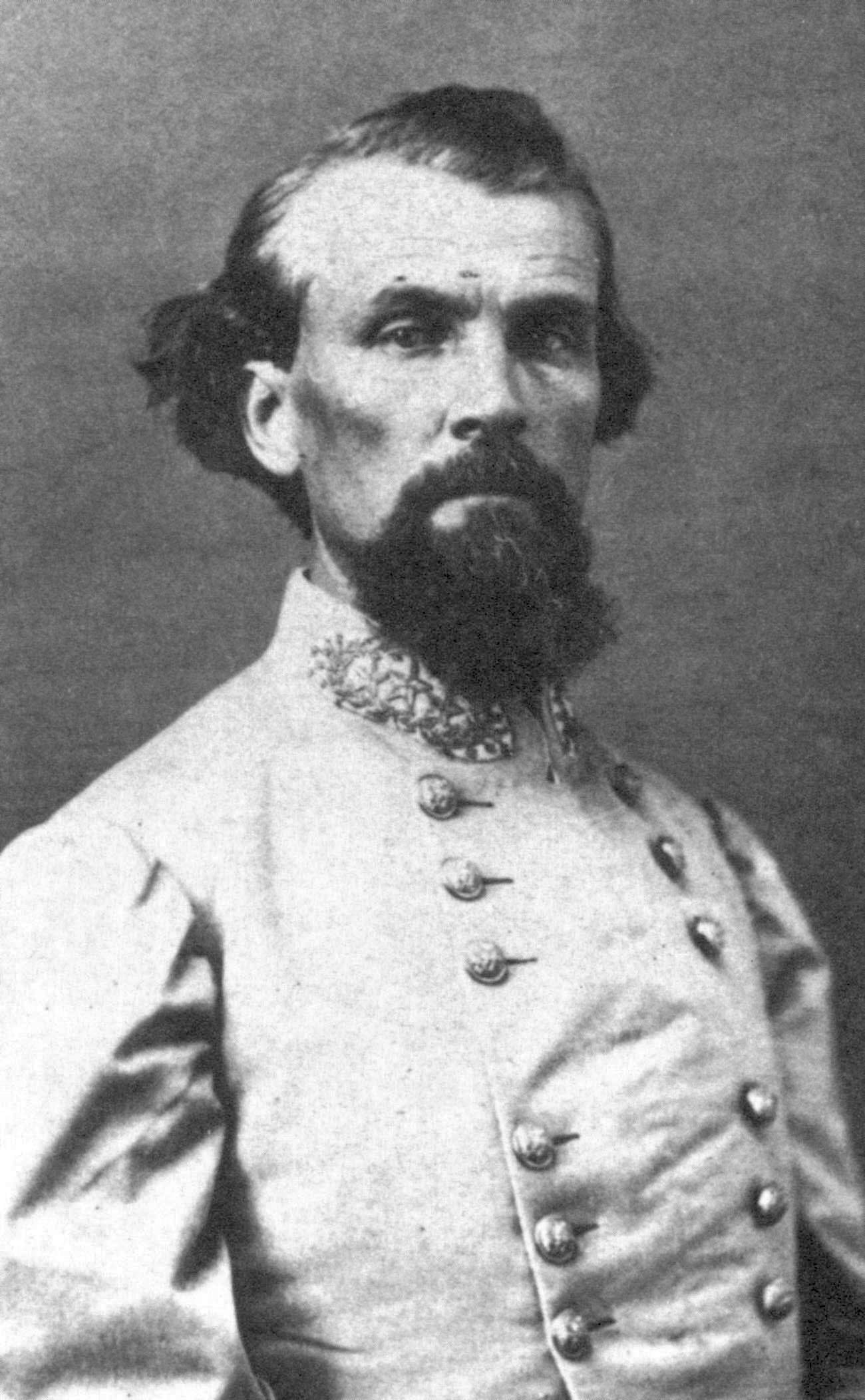
Nathan Bedford Forrest left Columbia, Tennessee on a raid on December 11, 1862. He had been ordered by General Braxton Bragg, Confederate commander in the area, to stage this raid to cut Union supply lines. On December 17th, Forrest's advance towards Lexington, Tennessee was detected by Colonel Robert Ingersoll, who had about 650 raw men under his command. Forrest had about 2,500 experienced troopers. There were two roads to Lexington, the Old Stage Road and the Lower Road. Ingersoll ordered a bridge to be destroyed on the Lower Road so he could focus all his men on the Old State Road.

On the morning of December 18th, 150 years ago today, as Forrest advanced up the Lower Road, he found the bridge still intact. The Yankee scouts had failed to destroy it. The Confederates were able to move around the Federal flank and catch them competely by suprise. Ingersoll tried to wheel his troops around the meet the threat, but before that could be done they were fleeing in a panic. In the rout that followed, Forrest's cavalry captured Ingersoll, 140 of his men, artillery, supplies and horses, and scattered the rest of the Union far and wide. In the following days Forrest pushed onward in another successful raid, destroying bridges and cutting Union supply lines.

Monday, December 17, 2012

Burnsides Retreats

On December 15th the Union army retreated, two days after the defeat at the Battle of Fredericksburg. Lee had won the most lopsided victory of the war. Burnside had chosen to cross the Rappahannock River and attack where Lee was prepared for him. Instead of focusing his efforts where he achieved a temporary breakthrough, he continued throwing his men forward in hopeless and bloody assaults against the Sunken Road. The Union army and nation lost all their confidence in Burnside. One northern war correspondent wrote:
It can hardly be in human nature for men to show more valor, or generals to manifest less judgment than were perceptible on our side that day.
A soldier said:
Almost everyone was cursing Burnside as the author of the defeat at Fredericksburg. At the Reviews when he rode along the lines & the Colonels would call out--'Three cheers for Burnside' the men would stand silent & sullen or mutter curses against him.
Although Burnside had been badly defeated, Lincoln had not lost confidence in him. He would remain in command of the Army of the Potomac.

Friday, December 14, 2012

Aftermath of the Battle of Fredericksburg

The day after his disastrous defeat in the Battle of Fredericksburg, General Burnside wanted to renew the assault, leading the attack personally at the head of his old corps. His subordinates, however, were able to talk him out of it.

The day after the battle, the troops remained in position, the dead and wounded still lying where they had fallen. All across the field, the Federal troops were crying for water. Finally Sergeant Richard Kirkland could stand it no longer and went to see Joseph Kershaw, commanding Cobb's brigade. Kershaw wrote:
"All night and all day I have heard those poor people crying for water, and I can stand it no longer. I come to ask permission to go and give them water" [Kirkland said.] The General regarded him for a moment ... and said "Kirkland, don't you know that you would get a bullet through your head the moment you stepped over the wall?" "Yes, sir," he said, "I know that; but if you will let me, I am willing to try it." ... [T]he General said, 'Kirkland, I ought not to allow you to run a risk, but the sentiment which actuates you is so noble that I will not refuse your request, trusting that God may protect you. You may go.' ... With profound anxiety he was watched as he stepped over the wall on his errand of mercy -- Christ-- like mercy. Unharmed he reached the nearest sufferer. He knelt beside him, tenderly raised the drooping head, rested it gently upon his own noble breast, and poured the precious life-giving fluid down the fever scorched throat. This done, he laid him tenderly down, placed his knapsack under his head, straightened out his broken limb, spread his overcoat over him, replaced his empty canteen with a full one, and turned to another sufferer. By this time his purpose was well understood on both sides, and all danger was over. From all parts of the field arose fresh cries of "Water, water; for God's sake, water!" More piteous still the mute appeal of some who could only feebly lift a hand to say, here, too, is life and suffering. For an hour and a half did this ministering angel pursue his labor of mercy, nor ceased to go and return until he relieved all the wounded on that part of the field. He returned to his post wholly unhurt. Who shall say how sweet his rest that winter's night beneath the cold stars!
A truce was finally called for Burnside to remove his wounded and care for them.