head
Showing posts with label slavery. Show all posts

Saturday, January 31, 2015

13th Amendment Passed

When Abraham Lincoln declared the southern slaves free with his Emancipation Proclamation, he did it as a war measure. The Constitution does not give the Federal government the authority to regulate or prohibit slavery, but Lincoln's argument was that he could do it, because it had to be done to win the war. This was shaky legal ground, and it was also unclear what would happen when the war ended. Since emancipation was done as a war measure, if there was no war, would they go back to being slaves?

The United States Congress determined to address this issue, and various bills were debated to determine what should be done. Several different Constitution Amendments were suggested to prohibit slavery. Eventually in early 1864 the Senate Judiciary Committee worked to merge multiple versions into one amendment. The committee introduced it to the Senate on February 10th, and it was passed with a vote of 38 to 6 on April 8, 1864. Next the amendment would have to pass the House, and there it encountered some trouble. In June the amendment failed to pass, with not enough Democrats supporting the measure to reach the two-thirds majority required by the Constitution.

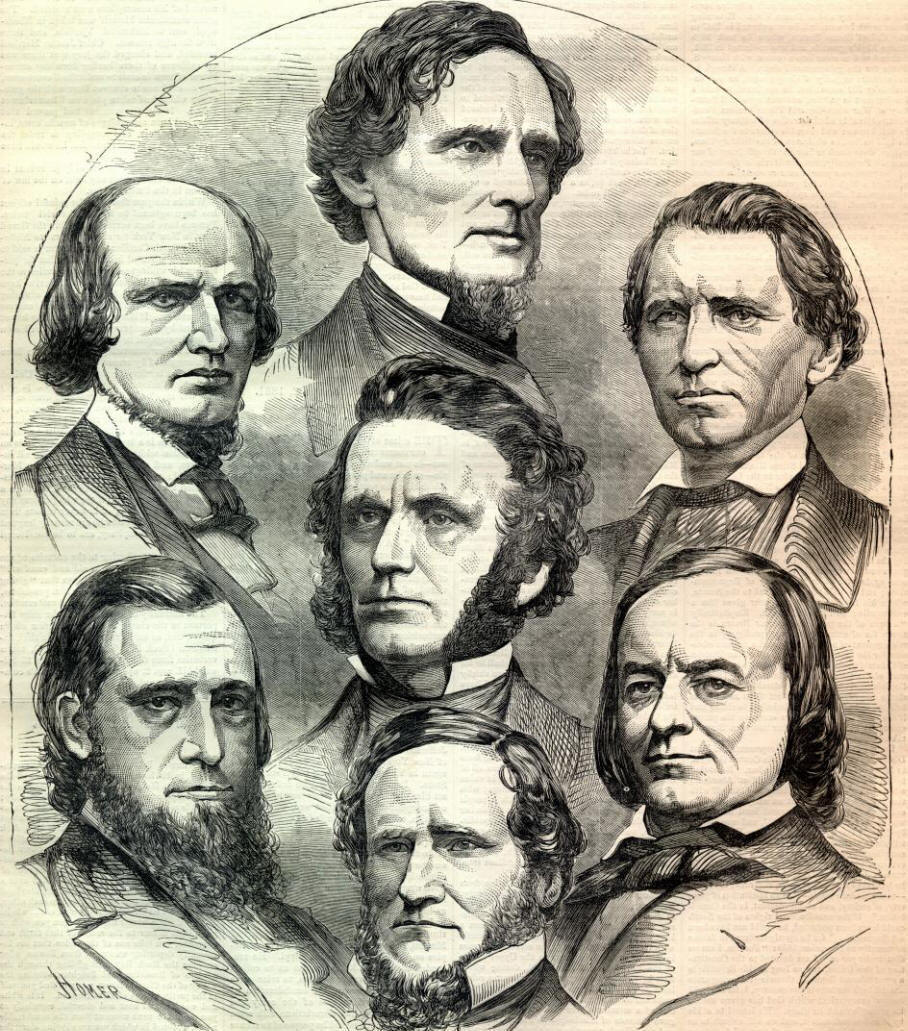
Garrett Davis
Since the southern states were not participating, no one was really arguing in favor of slavery. The Democrats were simply arguing that it would violate the principles of state's rights to give the Federal government control over slavery, which was part of the internal government of the states. Senator Garrett Davis of Kentucky argued that the proposed amendment:
strikes at one of the most essential principles of our commingled system of national and of State governments. ... The absorption of the sovereignty ... to the general Government ... would be revolutionary and destructive of our system....1
John Hale
The Republicans argued that slavery was evil, and that it stood against the principles under which the United States had been founded. They believed that the time had come to rid the nation of an evil and unchristian blot on its record. John Hale of New Hampshire said,
We have had upon the pages of our public history, our public documents, and our public records some of the sublimest truths that every fell from human lips; and there never has been in the history of the world a more striking contrast than we have presented to heaven and earth between the grandeur and sublimity of our professions and the degradation and infamy of our practice.2
After many debates, the House did not have the votes to pass the amendment. Abraham Lincoln supported it, but not publicly, as he did not want to hurt his chances in the November 1864 election. After he was safely reelected, he turned his attention to getting the amendment passed as quickly as possible. Republican politicians like Secretary of State William Seward were willing to use any means necessary to win over votes. Government jobs or even direct bribes were offered to Democrats to try to convince them to change their position. Lincoln himself worked to convince representatives to support the amendment.

The 13th Amendment, with Lincoln's signature
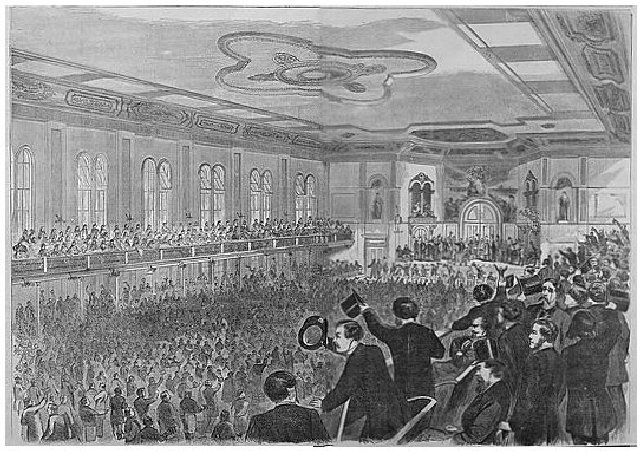
The final vote was held on January 31st, 150 years ago today. Neither side was sure how the vote would go. When the tally was made, the amendment passed 119-56, just over the two-thirds requirement. Sixteen Democrats joined all of the Republicans to pass it. The House and galleries broke out into celebrations when the amendment was passed. Although he had no formal role in the process, Abraham Lincoln added his signature to the joint resolution of Congress.

Congress passes the amendment
This was only the first step of the amendment process. The 13th Amendment still had to be ratified by three quarters of the states. Back in 1861 Congress had passed the Corwin Amendment, which would have guaranteed the protection of slavery to try to prevent the southern states from leaving the Union, but it was not ratified by enough states. The 13th Amendment was quickly ratified by every state remaining in the Union except for Delaware and Kentucky. Under the northern view the southern states were still in the Union, just in a state of rebellion, so they were necessary to reach the three quarters required. Reconstruction governments in Virginia and Louisiana ratified it. In the process of reconstruction the other southern states were told that to be readmitted to the Union they had to pass the amendment. Enough did so by the end of 1865 that Seward certified the amendment on December 18.

Blue: Ratified amendment
Green: Ratified amendment after it was enacted
Pink: Rejected amendment, later ratified after enactment
The 13th Amendment was a major step in the process of Reconstruction. By it the Federal government legitimized and permanently established the Emancipation Proclamation, ensuring that slavery would be outlawed in the southern states. By the way it was ratified, a precedent was set. The rebellious states would not be immediately readmitted to the Union. Conditions would be put upon the reconciliation, to ensure that the reestablished Union was upon those terms which the North believed necessary.

1. Great Debates in American History, (New York: Current Literature Publishing Company, 1915) vol. 6, p.
2. Ibid, p. 400.

Tuesday, January 1, 2013

Emancipation Proclamation goes into effect

Back in September, after the Union army had won the victory (or near victory) at Antietam, Abraham Lincoln had issued the Emancipation Proclamation. In it he said that the slaves in the states in rebellion would be freed if the states were still in rebellion on January 1st, 1863. That day had come, the war was still continuing, and so the Proclamation went into effect. However, only a small number of slaves were actually freed on this day. The Proclamation was declaring the slaves free in areas over which the government had no control, so until the armies pushed forward and recaptured the southern states, they would remain in slavery. However, there was a fraction of slaves that were immediately effected by the proclamation. The status of the “contraband of war,” slaves which had either escaped their masters or been released as the Union armies advanced, was made clear. They would be free. It appears that about 20,000 to 50,000 of the 4,000,000 slaves of the south were officially freed by this proclamation.
Not everyone in the north was pleased by this course of events. The war had begun as a fight to restore the Union. Although it was given as a war measure, Lincoln, with this proclamation, turned the purpose of the war to ending slavery. Many Northern Democrats disagreed with this measure, and some state legislatures even officially condemned Lincoln's course. However, the Republicans retained political power, so they would be the ones who would prosecute the war as they saw fit.

Saturday, September 22, 2012

Lincoln Issues the Emancipation Proclamation

Lincoln reads the Emancipation Proclamation
150 years ago today Abraham Lincoln issued he most important document of the Civil War, the Emancipation Proclamation. When Lincoln was elected president he was clearly anti-slavery, but he said he had no intention of interfering with slavery where it existed, only choking it by stopping it's spread into the territories. When the war, came he said that it was only to save the Union, and “if I could save the Union without freeing any slave I would do it, and if I could save it by freeing all the slaves I would do it...." At this point, however, Lincoln's intentions are hard to know. He may have been saying this because he actually meant it, or he might have just being trying to gain popular support for emancipating the slaves. We don't know, because although he may be called Honest Abe, he was not actually honest when it came to politics.

Lincoln had been planning for some time to issue an emancipation proclamation, but he had been waiting for a Union victory so that it would not look like a last ditch attempt to win. Antietam, although not as great a victory has he hoped for, gave him the opportunity he was looking for.

Lincoln's proclamation said:
I, ABRAHAM LINCOLN, President of the United States of America, and commander-in-chief of the army and navy thereof, do hereby proclaim and declare that hereafter, as heretofore, the war will be prosecuted for the object of practically restoring the constitutional relation between the United States and each of the states and the people thereof, in which states that relation is or may be suspended or disturbed.
That it is my purpose, upon the next meeting of Congress, to again recommend the adoption of a practical measure tendering pecuniary aid to the free acceptance or rejection of all slave states, so called, the people whereof may not then be in rebellion against the United States, and which states may then have voluntarily adopted, or thereafter may voluntarily adopt, immediate or gradual abolishment of slavery within their respective limits; and that the effort to colonize persons of African descent with their consent upon this continent or elsewhere....
That on the first day of January, in the year of our Lord one thousand eight hundred and sixty-three, all persons held as slaves within any state or designated part of a state, the people whereof shall then be in rebellion against the United States, shall be then, thenceforward, and forever free; and the Executive Government of the United States, including the military and naval authority thereof, will recognize and maintain the freedom of such persons, and will do no act or acts to repress such persons, or any of them, in any efforts they may make for their actual freedom.
That the Executive will, on the first day of January aforesaid, by proclamation, designate the states and parts of states, if any, in which the people thereof, respectively, shall then be in rebellion against the United States; and the fact that any State, or the people thereof, shall on that day be, in good faith, represented in the Congress of the United States by members chosen thereto at elections wherein a majority of the qualified voters of such state shall have participated, shall, in the absence of strong countervailing testimony, be deemed conclusive evidence that such state, and the people thereof, are not then in rebellion against the United States.
Lincoln said he had authority to do this because it was a war measure. However, the whole war for the preservation of the Union was based upon the principle that the states attempting to secede were really part of the Union. If that is true the president did not have the right do emancipate the property of southerners if he could not do it in peace time.
The Emancipation Proclamation was not a humanitarian document. It only declared the slaves free in territory not under the control of the United States. Therefore, unless the Union army was victorious in the war, the slaves would remain in their servitude. It also gave the Confederates the chance to save their slaves by returning to the Union before January 1st, 1863. or receive compensation for them through an (unconstitutional) act of Congress.
Lincoln
This proclamation had vast impact. It changed the cause of the war in the mind of the world from preservation of the Union into a war to abolish slavery. Everyone was not happy that. Some soldiers, in fact, deserted because they did not want to fight to end slavery. In any event the Union army eventually supported it, as it gave them a higher motive to fight for than to coerce the southern states. The impact in foreign policy was also great. European nations had been considering recognizing the Confederate States. But with the proclamation Lincoln was able to change their perception of the war to one over slavery, and although they might have been willing to aid in the separation of the Union, they would not aid in the preservation of slavery. The Emancipation Proclamation destroyed the south's best hope for victory – foreign recognition. From then on they would have to look to their own armies for victory.

Thursday, August 23, 2012

Lincoln on Freeing the Slaes

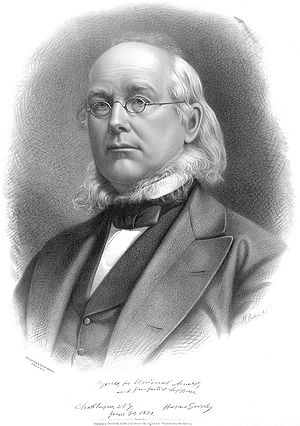
Around this time, 150 years ago, Abraham Lincoln sent a letter to Horace Greeley, who had much influence through his paper, the New York Tribune, explaining his reasoning as to freeing the slaves. Greeley had published on August 19th an open letter to Lincoln in his paper called "A Prayer of Twenty Millions." He was urging Lincoln to make more efforts to free the slave, including enforcing the Confiscation Act, which allowed the confiscation of any property of the rebels including slaves.
Lincoln
Executive Mansion,
Washington, August 22, 1862.

Hon. Horace Greeley:
Dear Sir.

I have just read yours of the 19th. addressed to myself through the New-York Tribune. If there be in it any statements, or assumptions of fact, which I may know to be erroneous, I do not, now and here, controvert them. If there be in it any inferences which I may believe to be falsely drawn, I do not now and here, argue against them. If there be perceptable in it an impatient and dictatorial tone, I waive it in deference to an old friend, whose heart I have always supposed to be right.

As to the policy I "seem to be pursuing" as you say, I have not meant to leave any one in doubt.

I would save the Union. I would save it the shortest way under the Constitution. The sooner the national authority can be restored; the nearer the Union will be "the Union as it was." If there be those who would not save the Union, unless they could at the same time save slavery, I do not agree with them. If there be those who would not save the Union unless they could at the same time destroy slavery, I do not agree with them. My paramount object in this struggle is to save the Union, and is not either to save or to destroy slavery. If I could save the Union without freeing any slave I would do it, and if I could save it by freeing all the slaves I would do it; and if I could save it by freeing some and leaving others alone I would also do that. What I do about slavery, and the colored race, I do because I believe it helps to save the Union; and what I forbear, I forbear because I do not believe it would help to save the Union. I shall do less whenever I shall believe what I am doing hurts the cause, and I shall do more whenever I shall believe doing more will help the cause. I shall try to correct errors when shown to be errors; and I shall adopt new views so fast as they shall appear to be true views.

I have here stated my purpose according to my view of official duty; and I intend no modification of my oft-expressed personal wish that all men every where could be free.

Yours,
A. Lincoln.

Lincoln's letter was not all it seemed to be. For even as he wrote this letter he was considering an emancipation proclamation to aid in the restoration of the Union. With this letter he was skillfully laying the ground work for public opinion to support him when the time came.

Greeley

Friday, September 2, 2011

Lincoln Repeals Fremont's Proclamation

John C. Fremont
On August 30th, General John C. Fremont issued a proclamation for the forces under his command which involved the freeing of the Southern slaves and killing prisoners in retaliation. Lincoln was not ready at that time to free the slaves. So he sent this message to Fremont ordering him to modify his proclamation, telling him his reasons for doing so.
WASHINGTON, D. C., September 2, 1861. 
Major-General FRÉMONT:
MY DEAR SIR: Two points in your proclamation of August 30 give me some anxiety: First. Should you shoot a man, according to the proclamation, the Confederates would very certainly shoot our best men in their hands in retaliation; and so, man for man, indefinitely. It is, therefore, my order that you allow no man to be shot under the proclamation without first having my approbation or consent.

Second. I think there is great danger that the closing paragraph, in relation to the confiscation of property and the liberating slaves of traitorous owners, will alarm our Southern Union friends and turn them against us; perhaps ruin our rather fair prospect for Kentucky. Allow me, therefore, to ask that you will, as of your own motion, modify that paragraph so as to conform to the first and fourth sections of the act of Congress entitled “An act to confiscate property used for insurrectionary purposes,” approved August 6, 1861, and a copy of which act I herewith send you.

This letter is written in a spirit of caution and not of censure. I send it by special messenger, in order that it may certainly and speedily reach you.

Yours, very truly,
A. LINCOLN.

Tuesday, August 30, 2011

Frémont Proclaims the South's Slaves Free

John C. Fremont
Today John C. Frémont issued a proclamation declaring the slaves in his military district free. Frémont was a famous explorer, and earned the name “The Pathfinder” for mapping a trail across the Rocky Mountains. Although he was from Georgia, he was the first presidential candidate of the Republican party. The Republican party was founded on the idea of opposing slavery. He lost the election, but four years later Lincoln won the election. Frémont was appointed a Major General, and appointed commander of the Department of the West, with his attention focused on the fighting in Missouri. Today Frémont issued a proclamation declaring martial law in Missouri. This was the most controversial part:
All persons who shall be taken with arms in their hands, within these lines, shall be tried by Court Martial, and, if found guilty, will be shot. The property, real and personal, of all persons in the State of Missouri, who shall take up arms against the United States, or who shall be directly proven to have taken active part with their enemies in the field, is declared to be confiscated to the public use, and their slaves, if any they have, are hereby declared free men.
Abraham Lincoln
The most debated part was saying the Confederates' slaves would be freed. As we will see, Lincoln was not ready for this. Although he would release a similar Emancipation Proclamation less than a year and a half later, at the time he wrote:
You speak of [Fremont's proclamation] as being the only means of saving the government. On the contrary it is itself the surrender of the government. Can it be pretended that it is any longer the government of the U.S.—any government of Constitution and laws,—wherein a General, or a President, may make permanent rules of property by proclamation?
I do not say Congress might not with propriety pass a law, on the point, just such as General Fremont proclaimed ...What I object to, is, that I as President, shall expressly or impliedly seize and exercise the permanent legislative functions of the government.

Saturday, August 6, 2011

Lincoln Confiscates the Slaves of the South

Lincoln
Today, 150 years ago, Lincoln signed the First Confiscation Act into law. The Confiscation Act permitted the seizure of any property used to support what they saw as the insurrection of the South. The property that was the most controversial was slaves. This would be the first step that the government would make towards freeing the Southern slaves. Lincoln was hesitant to sign the act, fearing it would make the remaining border states leave the Union to protect the slaves. But he eventually signed it on this day interpreting it not as freeing the slaves, but transferring their ownership to the Federal government.

Friday, March 4, 2011

Lincoln's Inauguration

The Inauguration
On March 4th Abraham Lincoln was inaugurated President of the divided United States. He rode with the outgoing president to the Capital, and right before his swearing in, Lincoln gave the customary inaugural address. In that speech he gave his views on the issues that were stirring the country and stated what policies he intended to follow.

Slavery

He began by saying that the South had no reason to secede because he never intended to interfere with slavery. He quoted a speech in which he said,
I have no purpose, directly or indirectly, to interfere with the institution of slavery in the States where it exists. I believe I have no lawful right to do so, and I have no inclination to do so.
While it was true that he did say that he would not fight slavery, Lincoln could not always be trusted. Even though he is know as "Honest Abe", at times he said contradictory things. Just a few months before he said,
‘A house divided against itself cannot stand.’ I believe this government cannot endure, permanently half slave and half free. I do not expect the Union to be dissolved -- I do not expect the house to fall -- but I do expect it will cease to be divided. It will become all one thing or all the other.
We can not know for certain which he intended to do, but the South certainly had good reason to believe that he would attempt to interfere with slavery.

Secession

Lincoln continued by stating his argument as to why the South had no right to attempt to leave the Union. He said that the Union was intended to be perpetual and therefore there was no way to leave it. However, this perpetuity was only implied and was nowhere stated expressly. The South would reply that the Union can end if the compact and covenant of the Constitution is broken by some parties or the states believe that it would be more beneficial for them to be independent.

Future Plans

The new President said that he would enforce the laws of the United States in the Southern seceded states, and hoped that bloodshed would not result. He opposed the proposed Constitutional Amendments regarding slavery, and had already stopped some of them. While he did not state it, he knew that the South would likely resist his actions. He wanted them to fire the first shot so the blame would fall on them. As his speech drew to a close, he said,
In your hands, my dissatisfied fellow-countrymen, and not in mine, is the momentous issue of civil war. The Government will not assail you. You can have no conflict without being yourselves the aggressors. You have no oath registered in heaven to destroy the Government, while I shall have the most solemn one to ‘preserve, protect, and defend it.’

The South

On the same day, hundreds of miles away in Montgomery, Alabama, the new Confederacy adopted the "Stars and Bars" as its new flag. They largely ignored his speech. The Confederate States had chosen their course and were prepared to defend it.

"Stars and Bars" first flag of the Confederacy

Tuesday, February 8, 2011

Confederate Constitution


The delegates to the convention in Montgomery, Alabama decided to base the Constitution for the new Confederacy off of the United States Constitution. While they had decided to leave the United States, they still thought that that form of government would be the best with a few minor adjustments. Therefore the new Constitution was word-for-word the same in most sections. We will go over the more important changes and see whether they were good improvements.

Preamble

We, the people of the Confederate States, each state acting in its sovereign and independent character, in order to form a permanent federal government, establish justice, insure domestic tranquillity, and secure the blessings of liberty to ourselves and our posterity—invoking the favor and guidance of Almighty God—do ordain and establish this constitution for the Confederate States of America.
They made several important changes to the preamble, which stated the general purpose of the government. The new government would be more limited and the state would be given more power, even though the changes they made were small. They stated more clearly that the states were establishing the new Union as sovereign and independent. They also removed the broad statement "to promote the general welfare," which they thought should be left to the states.

They also invoked the favor of God. God was referenced in the Declaration of Independence, but not in the U.S. Constitution even though almost all of the founders, including those who would not be considered Christians such as Benjamin Franklin, recognized the necessity of the blessing and providence of God. The Southerners wanted to add this idea specifically to the new Constitution.

President’s Term

They changed the term of the President from four-years to six, and he was not allowed to be re-elected. The limit in the number of terms would prevent people from choosing one “tyrant” over and over, but it would also stop a good man from continuing to serve his country. The six years would mean that if a bad choice was made, they were stuck with it for six years. Since the president was not able to be reelected, he would not change his policies as his term came to a close to please the people. This could have good and bad implications. The issue of the president's term was very complicated and the founders spent much time thinking about which was better. Both solutions have their benefits and problems.

State’s Rights

In Article 1 Section 2 they said that the state legislatures could impeach any federal officer or judge who worked solely in that state. This would increase the powers of the states to resist federal encroachments because they had the power to remove government officials that were doing things which they disagreed with.

Tariffs

They attempted to add provisions to restrain the Congress from favoring some industries over others with tariffs. This was one of the reasons they left the Union.. However, by their nature tariffs favor some industries. The real solution was for the congressmen to be very careful about what tariffs they voted for and whether they would unfairly favor an industry.

Slavery

They specifically banned the slave trade in the new Constitution, which we already discussed in a previous post: . http://civilwar150th.blogspot.com/2010/12/slave-trade.html They also explicitly gave the right to own slaves. However, many today are surprised that their new Constitution did not focus more on this issue. But the focus of the government would not be on slavery, that was just one of the reasons that compelled them to leave the Union.

Tuesday, February 1, 2011

Texas Leaves the Union

150 years ago today Texas voted to leave the Union, Sam Houston, the governor and one of the founders of Texas opposed secession and it had one of the lowest populations of slaves in the south. You can read their declaration of the causes of their secession here. They pointed back to 1845 when they were the Republic of Texas and they had freely voted to join the United States. They believed that since they had joined the Union freely as a sovereign republic, they retained the right to freely leave and resume their status among the nations of the world.

Sam Houston

Grievances

The Federal government under Lincoln denied slaveholders the right to settle in the territories which reached to the Pacific Ocean, and the Texans also pointed to the conflict that had resulted in Kansas. The Texans also said that the Federal government had failed to protect them from the Indians and Mexicans on the border and instead the state government had to spend its money to defend themselves.

Slavery

They sighted many grievances related to slavery. They protested against the North's ignoring the fugitive slave law, and their campaign to overthrow their institutions. The following is an excerpt from the Texas declaration of secession (actual title, if so capitalize and italicize):
For years past this abolition organization has been actively sowing the seeds of discord through the Union, and has rendered the federal congress the arena for spreading firebrands and hatred between the slave-holding and non-slave-holding States.
By consolidating their strength, they hare placed the slave-holding States in a hopeless minority in the federal congress, and rendered representation of no avail in protecting Southern rights against their exactions and encroachments. ...
And, finally, by the combined sectional vote of the seventeen non-slave-holding States, they have elected as president and vice-president of the whole confederacy two men whose chief claims to such high positions are their approval of these long continued wrongs, and their pledges to continue them to the final consummation of these schemes for the ruin of the slave-holding States.
One of the problems with this document is that they did not believe that the African race was equal to the whites. I would disagree with this, and you can read more about this in my post on slavery.

Secession

After Texas left the Union there was a gap in secession. No more states seceded for several months. You can read more about that here.

The Coming War

Samuel Houston refused to take the an oath to join the Confederacy and therefore resigned as governor. In a speech he said this:
Let me tell you what is coming. After the sacrifice of countless millions of treasure and hundreds of thousands of lives, you may win Southern independence if God be not against you, but I doubt it. I tell you that, while I believe with you in the doctrine of states rights, the North is determined to preserve this Union. They are not a fiery, impulsive people as you are, for they live in colder climates. But when they begin to move in a given direction, they move with the steady momentum and perseverance of a mighty avalanche; and what I fear is, they will overwhelm the South

Wednesday, January 26, 2011

Secession in the Upper South

Today Louisiana voted to secede 113 to 17, becoming the sixth state to secede.

At the time of the Civil War the south at the time of the Civil War could be divided into two portions, Deep South and Upper South. The Deep South contained states such as South Carolina, Florida, Texas, Georgia, etc. The Upper South was closer to the North – Virginia, North Carolina, Tennessee, Maryland, etc. While both held slaves, the Deep South was the first to secede after the election of Lincoln. However the Upper South was still with the Union when Lincoln was inaugurated. They trusted that the Republicans would not attempt to abolish slavery and that they would try to work out an agreement such as the Crittenden Compromise. This was the situation that many states were in at this point, 150 years ago. However, their representatives in Washington warned the North not to attack the states that had left. One said,
Believe me, the moment you wage war, you array the entire South, as one man, in behalf of the portion that is attacked, It is as when a brother is assailed, all the brethren rush to his rescue, not stopping to inquire whether, in the contest, he be right or wrong.1
The future would prove that in general, this statement was correct.

1. http://opinionator.blogs.nytimes.com/2011/01/22/no-better-southern-man/?partner=rss&emc=rss

Wednesday, January 19, 2011

Georgia Secedes

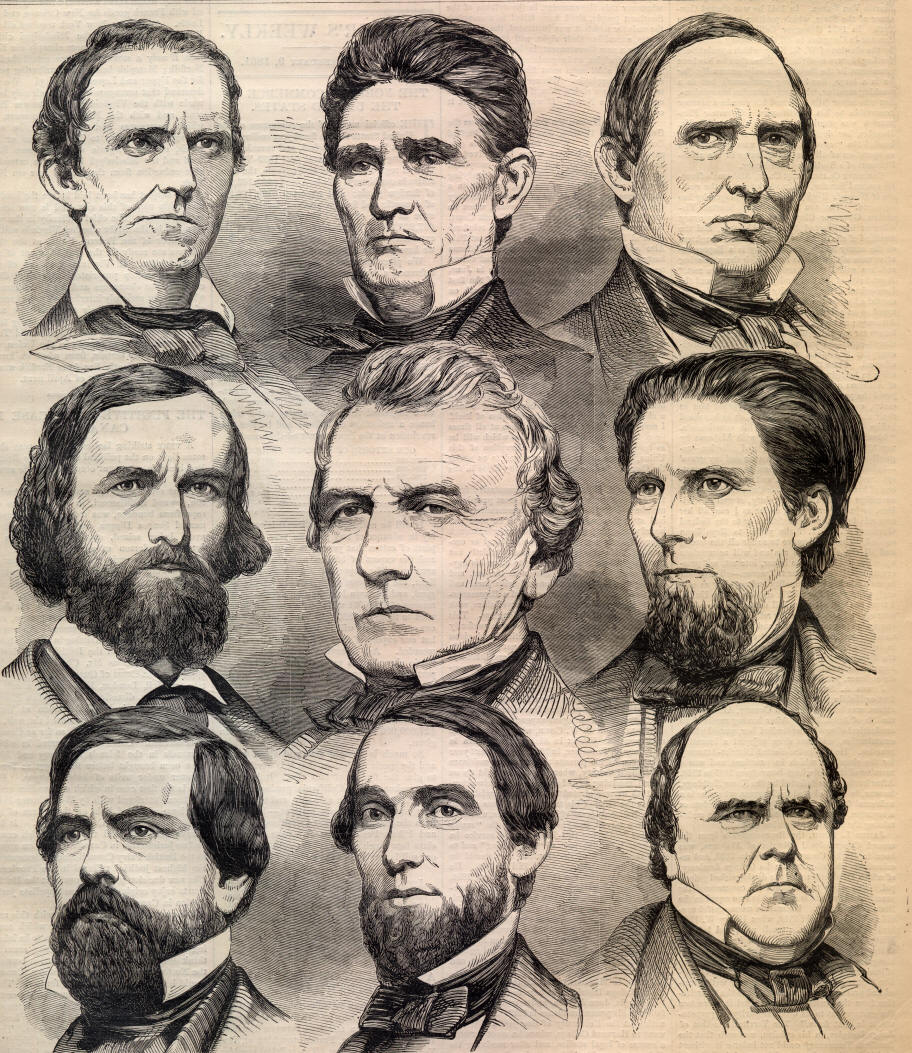
Georgia Delegation to Congress
150 years ago today, January 19th, Georgia voted to secede from the Union with a vote of 208 to 89. They were the fifth state to secede. Ten days later they also adopted a document in which they explained to the world their reasons for leaving the Union. You can read it here.

Georgia said that there had been a long disagreement over slavery, but they had ignored the problems because they wished to remain in the Union. The Constitution gave them the the right to have their escaped slaves returned, but the North refused to do so. All the debate was brought to a head with the choice of the North for Lincoln as their President.
Our Northern confederates, after a full and calm hearing of all the facts, after a fair warning of our purpose not to submit to the rule of the authors of all these wrongs and injuries, have by a large majority committed the Government of the United States into their hands. The people of Georgia ... have declared with equal firmness that they shall not rule over them.
The declared mission and purpose of the Republican party to which Lincoln belonged was to oppose slavery. Georgia did not wish to remain in a union that was seeking to overthrow them, so they voted to leave the Union:
For twenty years past the abolitionists and their allies in the Northern States have been engaged in constant efforts to subvert our institutions and to excite insurrection and servile war among us. They have sent emissaries among us for the accomplishment of these purposes. Some of these efforts have received the public sanction of a majority of the leading men of the Republican party in the national councils, the same men who are now proposed as our rulers

Tuesday, January 11, 2011

More States Secede

Mississippi's representatives in Congress

In the past few days, 150 years ago, three more states seceded from the Union. First Mississippi on January 9th, then Florida on January 10th, and Alabama on January 11th. Mississippi was the only one of the three to publish a lengthy document declaring the causes that impelled them to desire to leave the Union of the United States. I will discuss some of the most interesting and important reasons that they gave in A Declaration of the Immediate Causes which Induce and Justify the Secession of the State of Mississippi from the Federal Union here. You can read the complete document from which these quotes were taken here.

Slavery

Mississippi started out by acknowledging that they were leaving the Union because of slavery - "Our position is thoroughly identified with the institution of slavery-- the greatest material interest of the world." While there may have been other minor reasons for the first states to leave the Union, the major one was that the Federal Government was trying to abolish slavery. However, as we will discuss later, just because they seceded because of slavery did not mean war. The real question was whether the states had the right to secede.

Fugitive Slave Law

It has nullified the Fugitive Slave Law in almost every free State in the Union, and has utterly broken the compact which our fathers pledged their faith to maintain.
The rights of slaveholders were protected in the Constitution by it declaring that escaped slaves had to be returned. However, this part of the Constitution was ignored by the North and the legislatures of the states passed laws saying that escaped slaves did not have be returned. Since the Northern States had broken the Constitution, Mississippi believed that they no longer were required to stay in the Union.

Abolition

It has enlisted its press, its pulpit and its schools against us, until the whole popular mind of the North is excited and inflamed with prejudice.

It has made combinations and formed associations to carry out its schemes of emancipation in the States and wherever else slavery exists.
Several times Mississippi pointed to the fact that there was division in the Union – one half was trying to overthrow the other. It was not to their benefit to remain a part of a nation which was trying to overthrow the Southern States.

John Brown

It has invaded a State, and invested with the honors of martyrdom the wretch whose purpose was to apply flames to our dwellings, and the weapons of destruction to our lives.
In this argument they were trying to show that the Northern states really desired to overthrow the South by pointing out John Brown's raid on Harper's Ferry. John Brown, a fanatic criminal, was sent and financed by six prominent Northern abolitionists. While the raid was a failure, it spread fear through the South because the abolition movement had reached a point where some would attack the South rather than continue to leave the Negroes in bondage. At first the Northern papers called the attackers what they were – criminals, but eventually the view changed through the speeches and writing of men like Ralph Waldo Emerson, the famous author, who said: "[John Brown is] that new saint, than whom none purer or more brave was ever led by love of men into conflict and death,--the new saint awaiting his martyrdom, and who, if he shall suffer, will make the gallows glorious like the cross." Mississippi believed that it could separate from states who were glorifying men who had been sent to murder them and take their slaves.

Conclusion

Utter subjugation awaits us in the Union, if we should consent longer to remain in it. It is not a matter of choice, but of necessity. We must either submit to degradation, and to the loss of property worth four billions of money, or we must secede from the Union framed by our fathers, to secure this as well as every other species of property. For far less cause than this, our fathers separated from the Crown of England.

Our decision is made. We follow their footsteps. We embrace the alternative of separation; and for the reasons here stated, we resolve to maintain our rights with the full consciousness of the justice of our course, and the undoubting belief of our ability to maintain it.

Alabama's representatives in Congress

Alabama

Also of note is that when Alabama passed its resolution to secede, it invited at the same time all of the slave holding states to a meeting on February 4th to consider forming a union. This meeting of course resulted in the Confederate States of America, but we will wait to discus that until the proper time.

Thursday, January 6, 2011

Causes of the War - Slavery

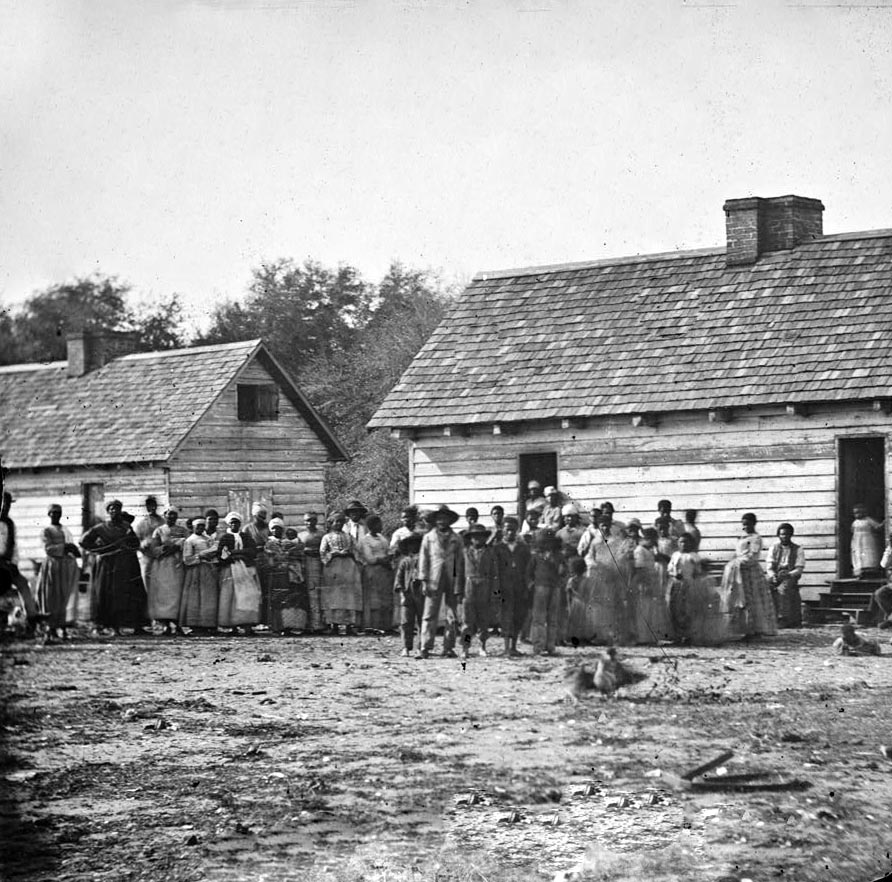
Slavery was the main cause of the secession of the deep South states, and it is what most people today believe was the cause of the war. But there are many misconceptions about what slavery was like, and whether or not it was a good thing.

Cruelty of Slavery

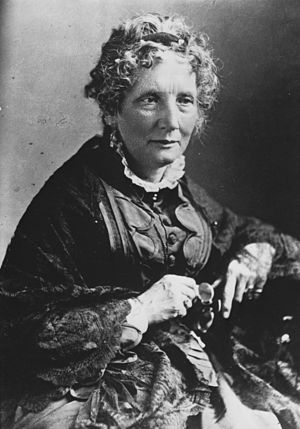
The book that had the greatest influence on the Northern and modern perception of slavery is Uncle Tom's Cabin by Harriet Beecher Stowe. That book caused many of the Northerners to believe that slaves were being tortured and needed to be freed, and that view continues until today. The problem is Harriet Beecher Stowe gave an incorrect picture of how slavery actually was. Not that the stories contained in her book were not based on fact – many of them were. But Stowe said they all happened to one family. It would be like someone today finding every horrible story about child abuse in the newspaper and writing a book saying they happened to one family. And what may seem cruel to us today would have been normal at that time. For example, beating. Slaves were beaten from time to time, but at the same time sailors were sometimes beaten with thousands of lashes. Practices which would have been normal at the time seem very evil to us today.

Harriet Beecher Stowe

Racial Reasons

Many people think that the Southerners believed that people with darker skin were a lesser race or not even people at all. Unfortunately, this view was held by some, but not all, of the people in the South. But this view was held by the Northerners as well. They believed that the slaves should be free, but that did not mean that they thought they should have the same rights as whites. Interracial marriages were illegal in most of the Northern states. Abraham Lincoln and others believed that after the slaves were freed they should be sent to colonies in Africa. Lincoln said, "Free them, and make them politically and socially, our equals? My own feelings will not admit of this; and if mine would, we well know that those of the great mass of white people will not."1 And, "[I]t does not follow that social and political equality between whites and blacks, must be incorporated, because slavery must not."2 So while some in the South did view blacks as a lesser race, the same view was held by many in the North.


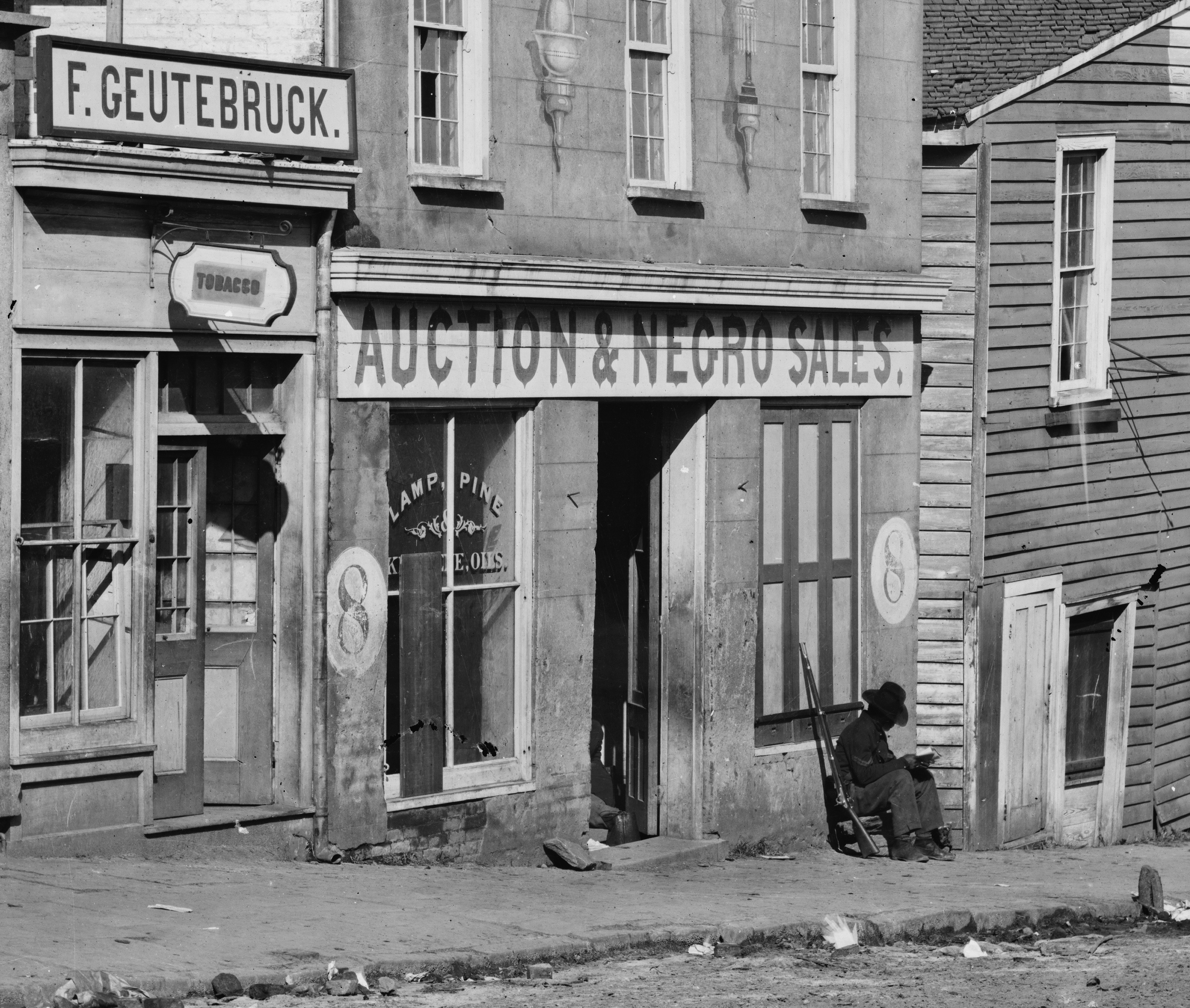
Slave Market in Atlanta, Georgia

Slavery in the Bible

One of the main reasons that the abolitionists claimed that slavery was wrong was because it is forbidden by the Bible. However, this is not true. While we do not have the space for a deep exegesis, I will give an overview of the reasons. In the Old Testament there were two different types of slavery which God commanded. If an Israelite sold himself into slavery, he must be let go after serving for seven years unless he wished to stay longer. However, if the Israelites captured prisoners when attacking a foreign nation, they were slaves forever. Many great Biblical figures were slaveholders, and in the New Testament God commanded masters to be just to their servants and servants to obey their masters. Never does the Bible forbid slavery or condemn slaveholders.


The Bible and Southern Slavery

When we compare Southern Slavery to the Bible we see several problems. First, the slavery was based partially on race. There were examples of white slaves and black masters, but that was not the norm. Second, the slaves were obtained in an unrighteous manner. The Slave Trade was clearly wrong, but as we have discussed before, it was illegal at the time of the war. Third, Christian slaves were not freed after seven years. While it is not expressly commanded in the Bible, we can assume that if a slave became a Jew, they would be freed after seven years like the normal Hebrew slaves. However, this was not practiced in the South. These are the major problems that I see with Southern Slavery.

The correct way to remedy these was not to abolish slavery. When this was done it caused bitterness against the former slaves by their former owners. The Bible commanded perpetual slavery for the pagans so that they could be transformed into productive members of society by becoming Christians. That process was not complete, therefore many of the descendants of the Civil War era slaves are slaves today to the government through welfare and other entitlement programs. They have continued to act like pagans in some ways, which results in a high murder rate in inner cities and a high illegitimate birth rate.

1. Political Speeches and Debates of Abraham Lincoln and Stephen A. Douglas edt. Alonzo T. Jones. Source. p. 9
2. The Writings of Abraham Lincoln: 1858-1862. (New York: The Lamb Publishing Company, 1906) Source. p. 16

Friday, December 24, 2010

Declaration of the Immediate Causes...

Secession Convention
150 years ago today South Carolina adopted a “Declaration of the Immediate Causes Which Induce and Justify the Secession of South Carolina from the Federal Union.” You can read that declaration here. The paper was to tell the world why they were leaving the Union. We will spend a little time looking at what they said.

War for Independence

They began with the history of the War for Independence and beyond. They declared that the war was to preserve from Great Britain “the right of a State to govern itself; and the right of a people to abolish a Government when it becomes destructive of the ends for which it was instituted. And concurrent with the establishment of these principles, was the fact, that each Colony became and was recognized by the mother Country a FREE, SOVEREIGN AND INDEPENDENT STATE.”

Constitution

They also held that because they voluntarily joined the Union by ratifying the Constitution, they had the rights of the laws of contract.  “We maintain that in every compact between two or more parties, the obligation is mutual; that the failure of one of the contracting parties to perform a material part of the agreement, entirely releases the obligation of the other...” Therefore they assert that they have a right to leave because as they are about to say, they believe the federal government had not fulfilled its Constitutional duties.

Fugitive Slaves

Their first grievance was the violation of the fugitive slave law. In the Constitution (as we have previously seen) the states were required to return escaped slaves to their masters. But with the rise of the abolition movement against slavery, the Northern states passed laws which rejected their Constitutional requirement because they did not believe slavery was just.

Resistance to Slavery

They also complained that even though the US Constitution left it it to each individual state to govern itself, the other states denounced the institution of slavery as a sin and encouraged the slaves to escape or rebel against their masters. They also said that they were no longer equal members of the Union when a candidate for President had been elected, Abraham Lincoln, who said that the, “Government cannot endure permanently half slave, half free.” Therefore they properly feared that they would be under attack from the Federal government because they held slaves.

Separation from the Union

They concluded by saying this:
We, therefore, the People of South Carolina, by our delegates in Convention assembled, appealing to the Supreme Judge of the world for the rectitude of our intentions, have solemnly declared that the Union heretofore existing between this State and the other States of North America, is dissolved, and that the State of South Carolina has resumed her position among the nations of the world, as a separate and independent State; with full power to levy war, conclude peace, contract alliances, establish commerce, and to do all other acts and things which independent States may of right do.
You may recognize that they are using the exact same language that the founders used in the Declaration of Independence. They were pointing back the the War for Independence and claimed that they had the right to do the same thing in 1860.


Concluding Thoughts

Notice in this document that South Carolina’s main reason to leave the Union was not that the North did not have slaves. It was because they believed that the Constitution had been violated by the states ignoring the fugitive slave law, and that it would be broken further when the federal government headed by Abraham Lincoln would attempt to eradicate slavery from the Southern states.

Tuesday, December 21, 2010

The Slave Trade

A Slave Ship
Most people today confuse Southern slavery with the slave trade, but they were actually very different things. The slave trade was the process of buying kidnapped slaves from Africa and bringing them over to Europe or America. By the time of the drafting of the US Constitution many people realized that this was an evil that should be outlawed, but because some states would not join the new nation if the slave trade was not protected for some length of time, the Congress was not allowed to outlaw it until 1808. However, it may surprise you which states opposed the slave trade. Virginia, although it had the highest percentage of slaves at 39%, had already outlawed the slave trade and had no problem with the Congress outlawing it has well. It was the states in the deep south that supported the slave trade.

Even though the North did not have a large number of slaves, they were the ones that owned and manned the ships that carried on the slave trade. Thomas Jefferson wrote this about the debate over the Declaration of Independence:
The clause too, reprobating the enslaving [of] the inhabitants of Africa, was struck out in complaisance to South Carolina and Georgia, who had never attempted to restrain the importation of slaves, and who on the contrary still wished to continue it. Our northern brethren also I believe felt a little tender under those censures; for tho' their people have very few slaves themselves yet they had been pretty considerable carriers of them to others.1
By 1808 several more states had outlawed the slave trade and Congress outlawed it on January 1st, the earliest date that it was permitted to by the Constitution. When the Southern States left the Union and formed the Confederacy, not only did they not try to reestablish the slave trade, it was actually outlawed in the Confederate Constitution. They did not want to be associated with what they considered the evil practice of the slave trade.

1. Autobiography of Thomas Jefferson, p. 16-17. Source

Thursday, December 16, 2010

The Real Causes of the Civil War


Before we can understand who was right in the Civil War and the effects that it has had on America today, we first need to understand what caused it. If you ask the average American today what caused the Civil War, he would tell you it was because the North wanted to free the slaves. But that is not true. The idea that the war was fought over slavery is the biggest misconception about it today. The war was fought over whether or not states had the right to secede. Lincoln wrote this during the war:
My paramount object in this struggle is to save the Union, and is not either to save or to destroy slavery. If I could save the Union without freeing any slave I would do it, and if I could save it by freeing all the slaves I would do it; and if I could save it by freeing some and leaving others alone I would also do that. What I do about slavery, and the colored race, I do because I believe it helps to save the Union; and what I forbear, I forbear because I do not believe it would help to save the Union.1
However, as we will see through the next few weeks, Lincoln frequently lied. He did have a chance to save the Union and preserve slavery, but he rejected it. But most of the Northern soldiers were fighting to preserve the Union, not to end slavery.

If you look deeper and examine the causes of secession, then you will find slavery played a big role in causing the Southern states to attempt to leave the Union. But even that it is not as clear cut as most make it out to be. There were also economic and religious reasons that went into the decision to leave the Union.

There were four main causes of succession and the war which do overlap at some points. We will look at these as a progression, not in order of importance. First there were economic reasons that caused the South to believe that the North was robbing them. Second there were religious differences because of Unitarianism. These religious differences caused the third disagreement which was slavery, and lastly there is the idea of state sovereignty. In the coming days we will examine each of these causes and who was right in each instance.

1. Source