head
Showing posts sorted by relevance for query Vicksburg. Sort by date Show all posts

Sunday, May 12, 2013

Battle of Raymond

Vicksburg campaign
Grant's orders were, after crossing the Mississippi River, to march south to join Banks and capture Port Hudson, before moving on Vicksburg. But he decided to attack Vicksburg first. Although the Federal armies would be smaller, if they united Banks out ranked him and would receive all of the glory if they were victorious. Although he was sure Halleck would veto his plan, Grant's message informing him of the change would not reach him until Grant had already moved and it was too late to do anything about it.

Grant
One of the major problems for Grant was supplies. He wanted to move quickly on Vicksburg before it was reinforced. He wrote to Sherman who was moving to join him:
It is unnecessary for me to remind you of the overwhelming importance of celerity in your movements. The enemy is badly beaten, greatly demoralized, and exhausted of ammunition. The road to Vicksburg is open. All we want now are men, ammunition, and hard bread. We can subsist our horses on the country, and obtain considerable supplies for our troops.
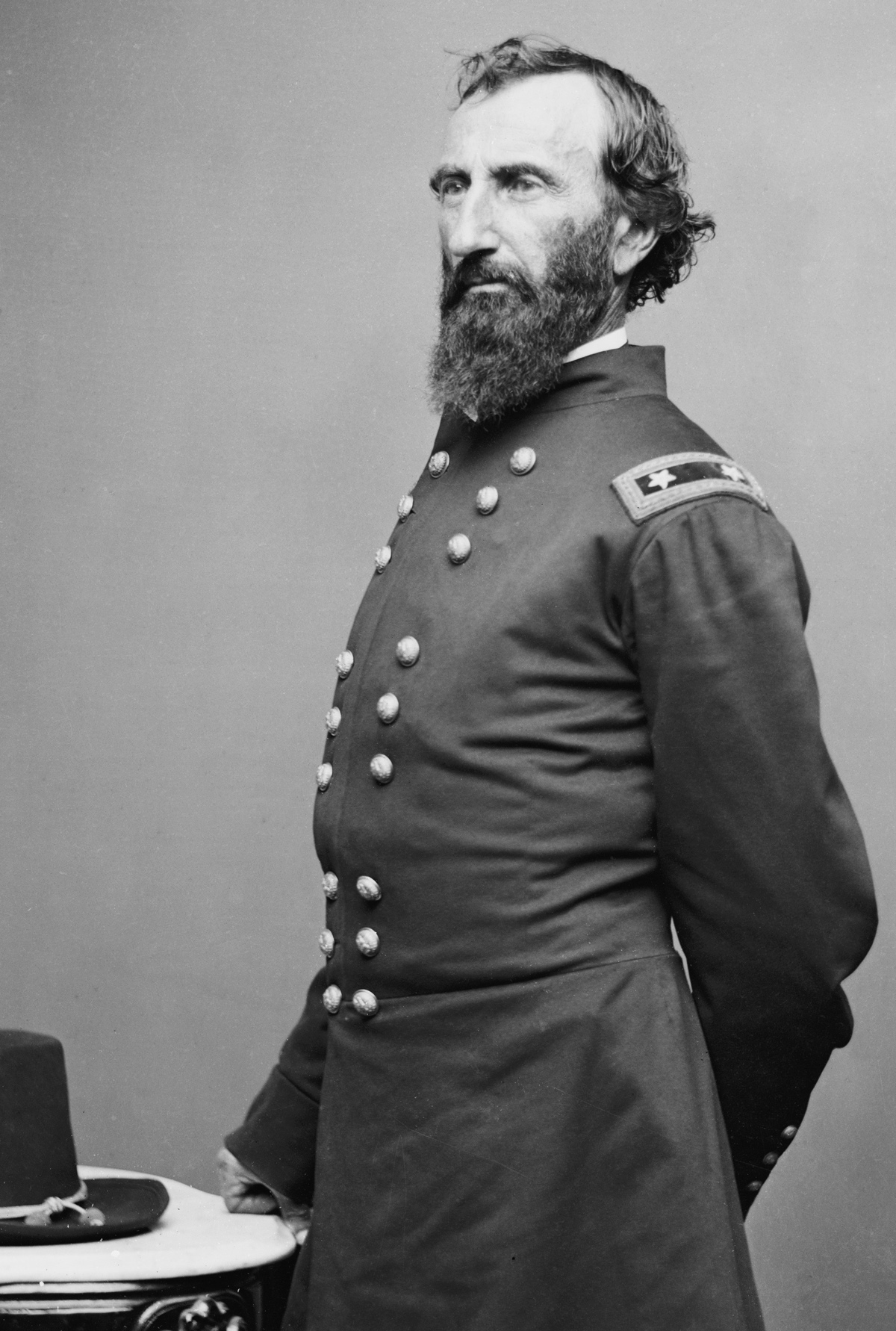
The situation was not as good for the Federals as Grant thought. The Confederates would not give up Vicksburg without a hard fight. Reinforcements were on the way to reinforce Pemberton, and he pulled his men back north to limit the territory they would have to defend. This would lengthen Grant's supply line even farther, making it harder and harder to keep his men fed. However, Pemberton miscalculated. Like Scott had done in the Mexican American War, Grant would not depend on his supply line. Through carefully managed logistics, he would bring up a few necessary supplies and for the rest would live off the country and what he could carry in wagons. He would capture Jackson, Mississippi first, and destroy it as a railroad hub, at which point he could turn on Vicksburg without having to worry about an army in his rear. McClernand would move up the Big Black River between Jackson and Vicksburg, while McPherson moved directly on Jackson, leaving Sherman in reserve.


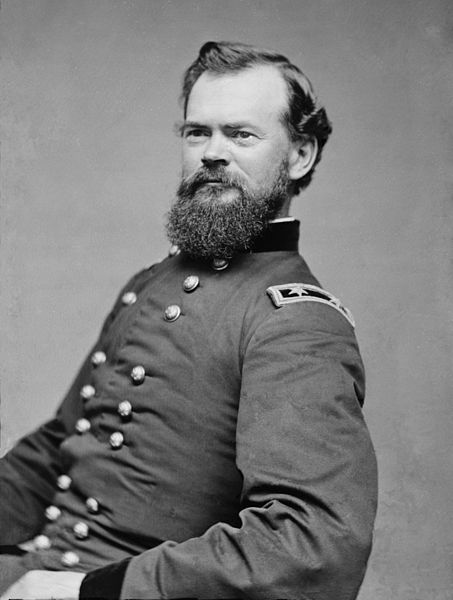
McPherson encountered the Southern troops around Raymond on May 12th. They were 4000 Confederate troops under John Gregg. McPherson alone had three times this number. Gregg planned to attack what he originally thought was only a raiding party by ambushing and surrounding them after they crossed Fourteen mile creek. The first division McPherson sent forward was disorganized by the terrain. The creek was very shallow, but it was in a deep gorge and the area was covered with vines and thorns. When the Confederates charged with their terrible rebel yell, the Federals retreated, but they rallied and engaged in a hot fight with the Confederates at very close range. When the regiments Gregg had sent to get in the Yankee's rear were in position, they found the plan was impractical because they were fighting an entire corp, instead of the raiding party they expected. The Confederates would not be able to hold their position for long, and a retreat was ordered. Half of a regiment fought as a rear guard against the Union division, allowing many Confederates to escape from the disorganized battle. The Confederates fell into disorder before the large number of Federal troops, but Gregg threw in his reserves and rallied his fleeing men. He was able to delay McPherson long enough for his outnumbered and battered men to be able to retreat safely.

John McPherson

Sunday, July 15, 2012

The CSS Arkansas Fights at Vicksburg

At this time Vicksburg, the last remaining Confederate stronghold on the Mississippi River, was being attacked by the Federal navy under Flag Officers David Farragut and Charles Davis. However, 150 years ago today, the situation was brightened for the southerners with the attack of the CSS Arkansas.

The Arkansas was an ironclad begun in October 1861 in Memphis Tennessee. With the approach of the Federal ships here sister ship, the Tennessee, had to be burnt, but the Arkansas was far enough along that she was able to be taken to Yazoo City to be finished. Captain Issac Brown was sent out by the Navy Department to finish and captain her. Gathering local workers, in six weeks he had her fit for duty, excepting a few section of curved armor. He gathered a crew of 160 men, sailors from river boats and also infantry soldiers. Although they were inexperienced, they were spoiling for a fight. "The only trouble they ever gave me" Brown said, "was to keep them from running the Arkansas into the Union fleet before we were ready for battle." When his preparations were complete he set sail for Vicksburg to attack the Union fleet. On the way there it was discovered that steam had gotten into the forward magazine and wet the powder, making it useless. However, Brown pulled over to shore, spread the powder on tarps and was able to get it dry enough to explode by sundown, so he against out on his way.

Just after sunrise, 150 years ago today, the Arkansas can in sight of three Union fleet, the ironclad Carondelet, ram Queen of the West and wooden gunboat Tyler. Brown attacked, and soon disabled the Carondelet with a shot in her steering mechanism. He pursued the other two ships down river, and turning a bend came upon the rest of the Federal fleet, "a forest of masts and smokestacks." Not halting for a moment, the Arkansas bore down upon them. The Federal ships, not expecting an attack, did not have their steam up and therefore were imobile. The Arkansas sailed through the entire fleet, trading shots with the ships, and arrived safely in Vicksburg amid the cheers of the populace, who had watched the bold run.
David Farragut

Farragut was not content to let this ship remain in Vicksburg. That night he ran his fleet past Vicksburg, and as he did, tried to destroy the Arkansas. In this he was again unsuccessful. His ships missed their target in the darkness, and only one shell struck the Confederate vessel, killing two and wounding three. When the day was over the Federals had lost 23 killed, 59 wounded and 10 missing, probably drowned. The Arkansas lost only 12 killed and 18 wounded. Although the Arkansas had not sunk any ships, she had delt a blow at Union pride and was a constant threat to the Federal fleet around Vicksburg, forcing them to keep under constant steam. The Federals tried to destroy her again on July 22nd. The ships which made the attempt tried to ram but could not sink the Arkansas and instead were riddled with shot from ship and shore. Having tried twice to destroy the peskey Confederate vessel, Farragut and Davis left Vicksburg with their ships, it having been clear already that infantry were required to capture the city.

Saturday, May 18, 2013

Vicksburg Surrounded

Siege of Vicksburg
After defeating the Confederate army yet again in the Battle of Big Black River Bridge, the Federal forces continued their pursuit. Pemberton had received orders from Johnston to abandon Vicksburg and save his army. He had written:
If Haines Bluff is untenable, Vicksburg is of no value and cannot be held. If, therefore, you are invested at Vicksburg, you must ultimately surrender. Under such circumstances, instead of losing both troops and place, we must, if possible, save the troops. If it is not too late, evacuate Vicksburg and its dependencies, and march them to the northeast.
That was something Pemberton would not agree to do. President Jefferson Davis had said the city would be held to the last ditch, and that's what Pemberton would do. He fell back to the city, and the Union forces moved in to surround him, 150 years ago today. The siege of Vicksburg had begun. The Confederates had 18,500 troops in the town's nearly impregnable 6 ½ miles of defenses, Grant had 35,000 with more coming, and the support of the navy. Grant had finally succeeded in crossing the river, and maneuvering to position himself in front of the city. Now he just had to capture it, but that would prove to take many more weeks.
Pemberton

Tuesday, January 22, 2013

Grant Takes Command at Vicksburg

Grant
When Grant heard of the capture of Fort Hindman, he was very upset. John McClernand had moved without informing Grant, and Grant saw this as only a waste of time in the main mission – to capture Vicksburg. Using this as an opportunity to take out McClernand, a possible threat to his authority, Grant got permission from Halleck to take command of the army himself.

When he arrived there on January 30th, he was faced with a hard problem. Vicksburg was built on a bluff running roughly along the Mississippi River. Repulsed at Chickasaw Bayou, Sherman had shown the difficulty of attacking the bluffs themselves, and Grant had already retreated from an attempt to march overland because of strikes at his supply lines, and the batteries at Vicksburg were so strong it was clear the navy would not attempt to silence the guns. That left Grant with two options. He could try to run the batteries, a dangerous proposition in unarmored transports, or he could try to find a way to go around, which is what he set out to do.
Grant's Canal
It was about this time that the work was resumed on the first in his series of attempts to find a way around Vicksburg through the complicated rivers and bayous in the area. Grant planned to dig a canal across De Soto's point, right across the river from Vicksburg. If a canal could be opened, the Union ships could sail through, avoiding the Vicksburg batteries, and land troops below the town to capture it from the landward side. Work on a canal had already been begun with what was called "Butler's Ditch." But it was only six feet wide and six feet deep. Sherman set the men to make it 60 feet wide and 7 feet deep. The Union soldiers worked for weeks, many falling sick from diseases in the unhealthy, wet climate. But then as they were working the Mississippi River suddenly rose, as it is wont to do, filling the canal with dirt. With weeks of work wasted, the project was abandoned as hopeless.  

Saturday, February 2, 2013

Queen of the West Runs Vicksburg

Queen of the West
One of the major strengths of the town of Vicksburg was the batteries, built on the high bluffs above the river. The Confederate guns placed there could bring a terrific fire on any ship that tried to pass the town. One Union ship tried to do just that 150 years ago today. The Queen of the West was a steamer converted into a ram for use by the Union military. She was ordered to run past the batteries at Vicksburg and sink a Confederate steamer, the CSS City of Vicksburg, anchored in front of the city.

As the Queen of the West rounded the bend which led up to Vicksburg, the Confederates sprang to their guns and opened a heavy fire upon the Yankee ship. This fire, although terrific, was inaccurate, and the ship was struck only three times. The City of Vicksburg had been positioned so that a ram would have to swing out into the current to have a chance at a firm blow. That is just what Colonel Charles Ellet, captain of the Queen of the West did. But as the ship swung around, the current caught her and she lost all her momentum, as the Confederates planned. But Captain Ellet was ready for this. He wrote in his report:
I had anticipated this result, and therefore caused the starboard bow gun to be shotted with three of the incendiary projectiles recommended in your orders. As we swung around, Sergt. J. H. Campbell, detailed for the purpose, fired this gun. A 64-pounder shell crashed through the barricade just before he reached the spot, but he didn't hesitate. The discharge took place at exactly the right moment, and set the rebel steamer in flames, which they subsequently succeeded in extinguishing. At this moment one of the enemy's shells set the cotton on fire near the starboard wheel, while the discharge of our own gun ignited that portion which was on the bow. "The flames spread rapidly, and the dense smoke, rolling into the engine room suffocated the engineers. I saw that if I attempted to run into the City of Vicksburg again, my boat would certainly be burned. I ordered her to be headed down stream, and turned every man to extinguishing the flames. After much exertion, we finally put out the fire by cutting the burning bales loose. The enemy, of course, were not idle. We were struck twelve times, but, though the cabin was knocked to pieces, no material injury to the boat or to any of those on her was inflicted. About two regiments of rebel sharpshooters in rifle-pits kept up a continuous fire, but did no damage. The Queen was struck twice in the hull, but above the water line. One of our guns dismounted and ruined.
I can only speak in the highest terms of the conduct of every man on board. All behaved with cool, determined courage.

Thursday, July 11, 2013

Vicksburg and Port Hudson Surrender

Vicksburg
150 years ago today, as the Confederates were retreating after their defeat at the Battle of Gettysburg, Vicksburg, Mississippi, the last Confederate stronghold on the Mississippi River, surrendered. The Union had been attempting to capture the town for many months, and it had been under siege since May 18. U. S. Grant had made two frontal attacks on the strong fortifications soon after the siege began, but the Confederates beat them both back with heavy losses.


Abandoning charges on the works, the Federals began a conventional siege. As Grant said, “I now determined upon a regular siege—to “out-camp the enemy,” as it were, and to incur no more losses.” The Yankees dug their entrenchments closer and closer to the Confederate works spread out along the bluffs along the Mississippi River. The rebels were completely surrounded, and they could expect no supplies to arrive. Their stores were very low. They had a good amount of ammunition, but not enough food. They soldiers and civilians ate anything they could find. Mules, cats and dogs began to disappear, some men even tried to eat their leather shoes. But it wasn't enough. Before long the symptoms of malnutrition and starvation began to show themselves. By the end of June half of the Confederate soldiers were unfit for duty. One southerner wrote:
It seems wonderful that human endurance could withstand the accumulated horrors of the situation. Living on this slender allowance, fighting all day in the hot summer's sun, and at night, with pick-axe and spade, repairing the destroyed portions of the line, it passed all comprehension how men endured the trying ordeal.
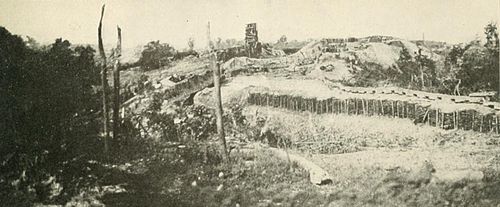
The Union didn't sit passively waiting for the Confederates to surrender. They dug mines to try to blow up the Confederate works. They also kept up a bombardment on the town from their entrenchments as well as the gunboats in the river. Their shelling of the town destroyed many buildings, forcing civilians to take refuge in caves dug into the bluffs.

The Confederate government did all it could to relieve Vicksburg. Kirby Smith in the Trans-Mississippi was ordered to try to strike Grant's supply lines. One reason behind Lee's invasion that would culminate in the Battle of Gettysburg was the hope that it might convince the Federals to abandon the siege. Joseph E. Johnston was given the responsibility to try to raise the siege by force. He was forming an army that was to try to strike Grant's rear. But he believed that his forces were weak. He suggested that Pemberton try to break out and abandon the city so that they could unite their armies. But with the strong works encircling Vicksburg, that would be impossible. The Confederate government ordered Johnston to try to relieve the town no matter the odds. James Seddon, Secretary of War, wrote him:
Vicksburg must not be lost without a desperate struggle. The interest and honor of the Confederacy forbid it. I rely on you still to avert the loss. If better resources do not offer, you must hazard attack. It may be made in concert with the garrison, if practicable, but otherwise, without-by day or night, as you think best.
But Johnston disobeyed these orders, and made no serious attempt to relieve the city before the end came.


On July 3rd, his men starving, too weak to try a breakout and with no hope of relief, Pemberton sent a message to Grant asking for terms of surrender. Grant replied, as he had at Fort Donelson, that he would accept only unconditional surrender. But Pemberton refused. The Confederates had cracked the code used by the Federal troops to send messages between the gunboats and the land forces. They had read their messages that said that they would have to parole all the Confederate troops because they didn't have the transportation to take them north. Grant relented, and the surrender was finalized on July 4th, independence day. During the siege the Federals had 4,835, the Confederates 3,202, as well as 29,495 captured.

Port Hudson
As the Confederate troops were turning over their arms, many miles away Robert E. Lee's troops were retreating after having been defeated at the battle of Gettysburg. Some would say that this double defeat was the turning point of the war for. Five days later Port Hudson would fall, the Confederates were almost out of ammunition and supplies and the commander realized that if Vicksburg could not be saved, he was doomed. At one blow, the last great strongholds on the Mississippi River fell, and the greatest invasion of the north was defeated. The Confederacy's cause was beginning to appear truly dismal.

Thursday, December 20, 2012

Sherman Heads to Vicksburg

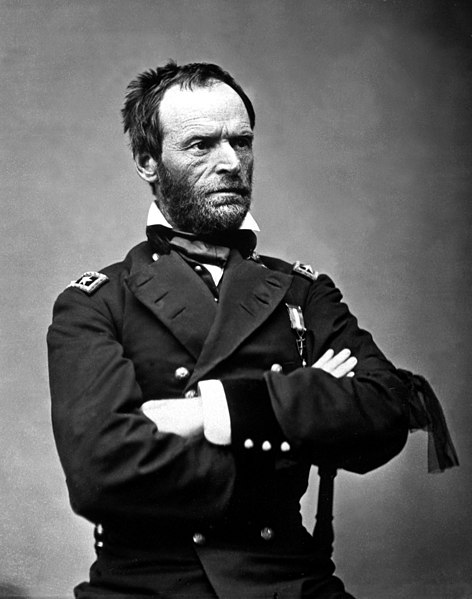
Sherman
While Van Dorn and Forrest were raiding Union supply lines, William Sherman was beginning the very movement they were trying to stop. On October 19th Abraham Lincoln had appointed John McClernand to command a new army to attempt to take Vicksburg. This worried Grant, who planned for the capture of that Confederate stronghold to be his next mission. Spurred to action by this threat to his command, he moved quickly, and ordered his trusted subordinate William Sherman to move down the Mississippi River to Vicksburg while Grant converged with him, marching overland.
US transport on the Mississippi
It was 150 years ago today that Sherman boarded a transport in Memphis, Tennesse and set out down river, beginning this new campaign. That say he wrote to his brother, Senator John Sherman, saying:
Dear Brother:

I embarked to-day on the Forest Queen and will have 20,000 men in boats by noon and be off for the real South. At Helena I will get about 12,000 more. Like most of our boasts of the “Myriads of the northwest sweeping away to the Gulf,” “breaking the back bone,” &c. &c., the great Mississippi expedition will be 32,000 men. Vicksburg is well fortified and is within telegraphic and railroad reach of Meridian, Mobile, Camp Moore and Grenada, where Pemberton has 30,000 to 35,000 men. Therefore don't expect me to achieve miracles. Vicksburg is not the only thing to be done. Grant is at Coffeeville! (?) with say 40,000 men. He expected me to have the same but they are not here. We can get the Yazoo, can front in any and every direction and can take Vicksburg, clean out the Yazoo, capture or destroy the fleet of enemy's gunboats and transports concealed up about Yazoo city — and do many other useful things. Blair is down at Helena and will doubtless form a part of the expedition. He will have a chance of catching the Elephant by the tail and get a good lift.

Of course the pressure of this force acting in concert with Grant must produce good results. Even if we don't open the Mississippi, by the way an event not so important as at first sight, until the great armies of the enemy are defeated — we are progressing. I wish Burnside and Rosecrans were getting along faster, but I suppose they encounter the same troubles we all do. . . .

I rise at 3 A.M. to finish up necessary business and as usual write in haste. . . .  I am very popular with the people here and officers and indeed with all my men. I don’t seek popularity with the “sneaks and absentees” or the “Dear People.” . . .

Affectionately,

W. T. SHERMAN.

John Sherman

Wednesday, May 22, 2013

Another Attack on Vicksburg


Although the May 19th Union assault on the Vicksburg defenses had been a complete failure, that didn't stop them from trying it again. Another attack was launched on May 22nd, 150 years ago today. It was preceded by an artillery bombardment from the entire Union line, and the gunboats in the river. At 10:00 am Federal troops advanced everywhere at once. Sherman wrote:
A small party, that might be called a forlorn hope, provided with a plank to cross the ditch, advanced at a run, up to the very ditch the lines of infantry sprang from cover, and advanced rapidly in line of battle. ... The rebel line, concealed by the parapet, showed no sign of unusual activity, but as our troops came into fair view, the enemy rose behind their parapet and poured a furious fire upon our lines; and, for about two hours, we had a severe and bloody battle, but at every point we were repulsed.
McClernand
As the bloody fighting continued, McClernand reported to Grant that he had secured a foothold on the Confederate line. To help him, Grant ordered the attacks to be renewed, loosing many men and gaining no more ground. McClernand's message had been misleading. He had only gained a new outlying works, not a portion of the main line. The attack was finally called off. The Union had lost 500 men killed, 2,550 wounded and 150 missing, and had gained nothing for these heavy casualties. It was evident that Vicksburg would not be captured with frontal attacks on the strong entrenchments. Other tactics would be necessary. Grant was not discouraged by the reverses. He wrote to Halleck:
Vicksburg is now completely invested. I have possession of Haynes' Bluff and the Yazoo; consequently have supplies. To-day an attempt was made to carry the city by assault, but was not entirely successful. We hold possession, however, of two of the enemy's forts, and have skirmishers close under all of them. Our loss was not severe. The nature of the ground about Vicksburg is such that it can only be taken by a siege. It is entirely safe to us in time, I would say one week, if the enemy do not send a large army upon my rear. With the railroad destroyed to beyond Pearl River, I do not see the hope that the enemy can entertain of such relief.

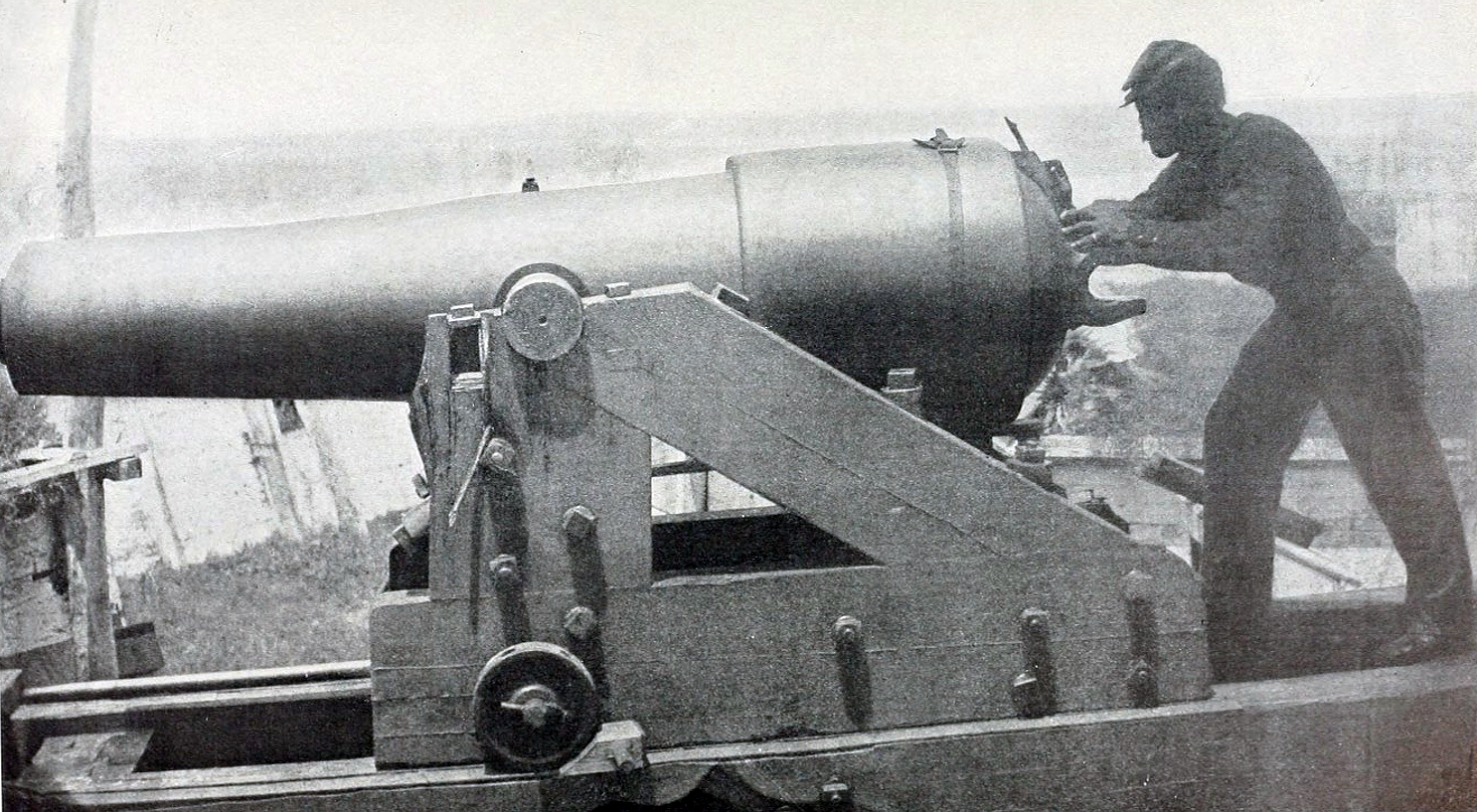
Confederate siege gun

Tuesday, April 2, 2013

Grant Develops a Plan to Capture Vicksburg

Grant
Over the last several months, Grant had tried many strategies to try to capture Vicksburg. But at every turn he had been rebuffed by the Confederates or the nature of the difficult terrain of the area. But 150 years ago he decided to abandon his efforts to capture Vicksburg by moving around it through the bayous and swamps, and instead to try to run the batteries, and land below the fortress where the terrain would be less formidable. Although the ground would be easier for operations, the army would have to run much peril to get there. They would need transports to cross the river, and these would have to run by the formidable batteries on the bluff at Vicksburg. The transports were made of wood, and would be very vulnerable to the Union shot. It was a bold and risky plan, but Grant believed it would give him the best chances to capture Vicksburg.

Saturday, May 25, 2013

Mine Exploded at Vicksburg

Siege lines at Vicksburg
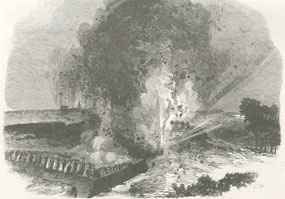
The Federals were not content with simply bombarding and waiting for the Confederates to surrender Vicksburg. They had been digging nine zig zag approaches to get close enough so that, with a final charge, they could get over the Confederate lines with little loss of life. They also began digging mines to try to blow up the fortifications. One was detonated 150 years ago today under the redan occupied by the 3rd Louisiana.
To dig the mine, six men would work for an hour, digging out the dirt and handing it back in bags to be taken out of the tunnel, and after working for an hour they were replaced with others to continue the work. The defenders heard the work of the diggers underground and began digging a counter mine to intercept them. They got so close that inside the mines each could hear the commands given to the other. However, they did not reach the mine in time. The mine was exploded at 2 pm on May 25th. 2,200 pounds of gunpowder blew apart the Confederate fortifications, creating a crater 40 foot wide and 12 foot deep. One Confederate soldier wrote:
A huge mass of earth suddenly, and with tremendous force and a terrific explosion, flew upwards, descending with might power upon the gallant defenders, burying numbers beneath its falling fragments, bruising and mangling them most horribly. It seemed as if all hell had suddenly yawned upon the devoted band, and vomited forth its sulphurous fire and smoke upon them.

The mine exploding
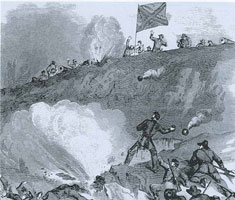
About a hundred men were killed or injured from the explosion alone. The Federals immediately opened fire on the crater and sent in infantry to attack. A Union officer wrote:
But little difficulty was experienced in entering the crater, but the moment the assaulting forces attempted to mount the artificial parapet, which had been formed by the falling debris about midway across the fort, completely commanded by the Confederate artillery and infantry in the rear, they were met by a withering fire so severe that to show a head above the crest was certain death. Two lines were formed on the slope of this parapet, the front line raising their muskets over their heads and firing at random over the crest while the rear rank was engaged in reloading. But soon the Confederates began throwing short-fused shells over the parapet, which, rolling down into the crater crowded with the soldiers of the assaulting column, caused the most fearful destruction of life ever witnessed under like circumstances. The groans of the dying and shrieks of the wounded became fearful, but bravely they stood to their work until the engineers constructed a casemate out of the heavy timbers found in the crater, and upon which the earth was thrown until it was of sufficient depth to resist the destructive effects of the exploding shells.
The Federals did not give up after this failed assault. They dug another mine and exploded it a few days later, destroying the fort even more. However, by the time preparations were completed for the assault, the siege of Vicksburg was over.

Fighting in the crater

Sunday, May 19, 2013

Sherman Attacks Vicksburg


When Grant arrived at Vicksburg, he did not delay in making preparations for an attack. He hoped to crush through the strong defenses while the Confederates were discouraged from their defeats of the past few days. He positioned Sherman on the right, McPherson in the middle and McClernand on the left. Grant decided to assault the Stockade Redan on May 19th, 150 years ago today.

Map of the May 19 attacks
At 2:00 pm the Union troops formed up in three lines with flags flying, and advanced against the Confederate fortifications. At first it appeared that the Confederate fortifications were deserted. But then as they pushed on the defenders stood up opened a terrific fire upon them. As Sherman said, "The heads of the columns have been swept away as chaff thrown from the hand on a windy day." One Union captain said that "the very sticks and chips, scattered over the ground jumping under the hot shower of Rebel bullets."

The assault on Vicksburg
The bluecoats pressed through the incredibly heavy fire. Two flagbearers made it to the wall, and planted the ensigns on the top, but their regiments were unable to follow. They were driven back, but came on again and again. In the three attacks, they were never able to make it over the walls. Some Federals were not even able to retreat. They lay hidden at the bottom of the parapet until night, when they were able to return to their lines. Sherman lost almost 1000 men, while the Confederates suffered less than 200. Pemberton was encouraged by the showing his men had made in driving back the Federals. They had redeemed themselves from their disgraces in the rest of the campaign, and the Confederate prospects for the siege seemed much improved.  

Friday, December 28, 2012

Preparations at Chickasaw Bayou

Having set out from Memphis, Tennessee with fifty transports on December 20th, Sherman's army was landed just ten miles north of the Confederate stronghold at Vicksburg on December 24th. However, the path into Vicksburg would not be easy. Between the Yankees and the town was very treacherous terrain, with bayous running at the foot of the high bluffs of the Walnut Hills, where the Confederate defenders would make their stand.
Steele

There was much confusion in the Union army as the troops landed. As the main army prepared to make an attack Sherman sent two brigades on December 26th to make a reconnaissance and check for weak spots in the Confederate line. Then 150 years ago today, on December 28th, Brigadier General Frederick Steele's division was sent to try to turn the Confederate right. But they advanced on a narrow front, and were driven back by Confederate artillery fire. However, undeterred by this reverse, Sherman decided to continue with plans for the attack the next day. As he said, "We will lose 5,000 men before we take Vicksburg, and may as well lose them here as anywhere else.”

Friday, October 19, 2012

McClernand Appointed to Command a New Army

McClernand
A few months back the Federal naval forces had moved in to Vicksburg, but after several weeks of combat had retired, having discovered it would take a major military force to capture the “Gibraltar of the West.” It seemed that Grant would be the man for the job but he had not yet moved, having spent his time fighting Van Dorn and Price in northern Mississippi. But 150 years ago today another man was appointed to make an attempt at it, and that was John Alexander McClernand.

McClernand was an Illinois lawyer whose career had been very similar to that of Abraham Lincoln, the president. Although he was a Democrat and Lincoln a Republican, they were still friends. When the war came he was appointed a political general, helping Lincoln to win support from the Illinois Democrats. 150 years ago today he obtained leave to visit Lincoln in Washington, DC, and convinced him to give him his own independent command to make an attack on Vicksburg, Mississippi. This news would spurn Grant into action. He did not want McClernand to gain the great fame that would come from the capture of Vicksburg, which Grant expected to be his own.

Saturday, December 29, 2012

Battle of Chickasaw Bayou

The Union troops along the Chickasaw Bayou just north of Vicksburg were ready to attack on December 29th, 150 years ago today. As the regiments swarmed forward in the first attack, the troops quickly became confused in the difficult terrain of the swamps and bayous. Many were lost and did not even make it across the bayou that separated them from the Confederates. The assault was a complete failure. The one regiment at least did make it into combat, the 4th Iowa, going through the line of Confederate rifle pits, but completely crumbled when it hit the main line. They were driven back after a valiant fight. Colonel James Williamson was wounded, and later given a medal of honor for his gallant conduct.
Williamson

General Sherman ordered another attack, but it did no better. Sherman wrote in his report of the defeat:
The men of the Sixth Missouri actually scooped out with their hands caves in the bank, which sheltered them against the fire of the enemy, who, right over their heads, held their muskets outside the parapet vertically, and fired down So critical was the position, that we could not recall the men till after dark, and then one at a time. Our loss had been pretty heavy, and we had accomplished nothing, and had inflicted little loss on our enemy.
Sherman had lost 1,776 men, the Confederates only 207. Sherman decided that there was no chance for a breakthrough here, and he reembarked his men on their transports. Yet again the Federals had been foiled in their efforts to capture Vicksburg, the last Confederate stronghold on the Mississippi. "Well," Sherman wrote to his wife, "we have been to Vicksburg and it was too much for us and we have backed out."

Monday, May 27, 2013

USS Cincinnati Sunk

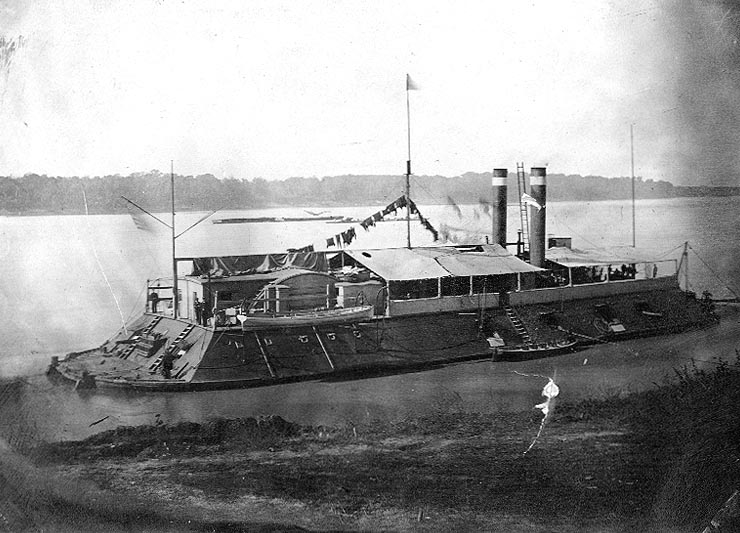
USS Cincinnati
In the siege of Vicksburg, the Union ironclads were used for their artillery – to bombard the Confederate positions. But that use would not come without a cost. The batteries on the bluff at Vicksburg were still very powerful, and they fired back at the Federal gunboats. 150 years ago their shots found a mark. The USS Cincinnati was sent down to destroy a two gun battery that had been annoying the Union infantry. She had been sunk and raise once before, a casualty of the bombardment of Fort Pillow on May 10, 1862. Now, just over a year later, she would be sunk again. As the Cincinnati moved toward the two guns, they were falling into a trap. There was another Confederate battery on the brush. The Federals could no longer see it, so they assumed that it had been moved. But the rebels had just hidden the guns in the brush. They had also cracked the Union signal code, so they were waiting for the Cincinnati. The Harper's Weekly printed this description of the battle:
She went gallantly into action, rounded the point, and blazed away at the rebel batteries, but the latter were not idle, and all the guns that could be brought to bear—rifled and smooth bore — opened on her. Her tiller ropes were shot away, and she got some heavy shot into her sides. The pilot was killed at the wheel, and her commander took his place. All the men at the wheel were wounded, but Lieut. Bache escaped unharmed.

She started up the river, as she made a great deal of water, rounded again the point of the peninsula opposite Vicksburg, and was struck by a plunging 10-inch smooth-bore or 7-inch rifled shot; she then commenced to sink, and her captain ran her inshore, where she sank to her hammock netting. The officers and crew saved nothing.
When the Cincinnati took a direct hit and her steering was knocked out, her captain knew she was doomed. He was able to drive the ship onto the bank, where she was tied to allow for an easy evacuation. But before the men could be got on shore the ropes came loose and the Cincinnati was pushed out into the river again. She sank in 13 feet of water. Those who could swim jumped over and headed for shore, but many were trapped on board the ship. Four of the crew, Landsman Thomas E. Corcoran, Boatswain's Mate Henry Dow, Seaman Thomas Jenkins, and Seaman Martin McHugh, began helping their fellow crew members escape. They helped them swim to shore. For those badly wounded from the Confederate fire, they returned to the sinking ironclad and repaired a small boat, and loaded the casualties on board. These four swimmers were awarded the Medal of Honor for their conduct. The ship suffered 40 casualties in this disaster. She would later be raised in August, 1863 and return to service

Tuesday, April 16, 2013

Porter Runs the Vicksburg Batteries

Porter
After determining on his plan to run the transports past the Vicksburg batteries, Grant moved quickly. The army worked on building a road over the swamps so they could march down the western bank, and it was completed by April 17th.


On the night of April 16th, David Porter was ready to try to sail his ships past the batteries. They were covered so they would be completely dark, and strict orders were given to make no noise. They would move slowly so their engines would not be heard. This plan started off working well. The boats were opposite Vicksburg before they were sighted. But, when they were discovered, the Southern guns opened on them with a tremendous fire. For ninety minutes the Confederates fired every gun they could, firing off over 500 shots. Even with all this resistance, Porter's fleet successfully ran the batteries. Most ships sustained only minor damage, though one transport was sunk. Altogether, it was a great success. Although one ship had been lost, no one had been killed and only 13 wounded. After receiving some repairs, the ships would be ready to transport Grant's men. A few more ships were sent through the next night, and, as before, all made it through except one.

Tuesday, May 14, 2013

Lee Proposes Invasion of North

Lee
Lee had won a glorious victory in the Battle of Chancellorsville, but he had been unable to completely destroy the Union army. The war was not progressing well for the south in other theaters and Grant was making progress towards the capture of Vicksburg, Mississippi. It seemed that unless something was done, the city was doomed. Lee also believed that even only considering Virginia, he would eventually have to go on the offensive again, or the fighting would turn into a siege which the Confederacy would not be able to maintain.

This left the Confederacy with two options. Lee could fall back to the defenses around Richmond and send a large portion of his army to try to help Vicksburg, or he could embark on another invasion of the North. He chose the latter, and went to Richmond 150 years ago today for a multi-day conference with high ranking Confederates.
Jefferson Davis
It was hoped that an invasion would accomplish a few purposes. First, it would demoralize the northern populace, and it might convince the government in Washington to pull troops from Vicksburg to meet Lee's threat. Second, the food supply in Virginia was diminishing, and it was getting harder and harder to find supplies in the places through which the armies and marched and counter marched. Moving north he could live off the enemy's country. And third, always in the back of Lee's mind was the thought that if he gained a great victory on the Union's own ground, he might finally be able to follow up on his victory, capture Washington, and perhaps even end the war. Lee believed continued defeats would mean that Lincoln would loose the election next November, and if Lincoln lost the election doubtless the war would end. He wrote to his wife:
If we can baffle them in their various designs this year, next fall there will be a great change in public opinion at the North. The Republicans will be destroyed & I think the friends of peace will become so strong as that the next administration will go in on that basis. We have only therefore to resist manfully ... [and] our success will be certain.
It was for all these reasons that Lee decided, with the agreement of the government in Richmond, to attempt another invasion of the north.

Thursday, May 16, 2013

Battle of Champion Hill

Map of the Vicksburg campaign
After abandoning Jackson, Mississippi to the advancing Federals, Joseph E. Johnston's plan was to unite with Pemberton, and force Grant to attack them. But Grant did not stick around Jackson long enough for Johnston to march to Vicksburg. Johnston ordered Pemberton to march to join him. But Pemberton choose to march east to attempt to capture Grant's supplies. When Johnston repeated his order, Pemberton turned around and began marching the other way. But before he could get out, Grant was upon him.


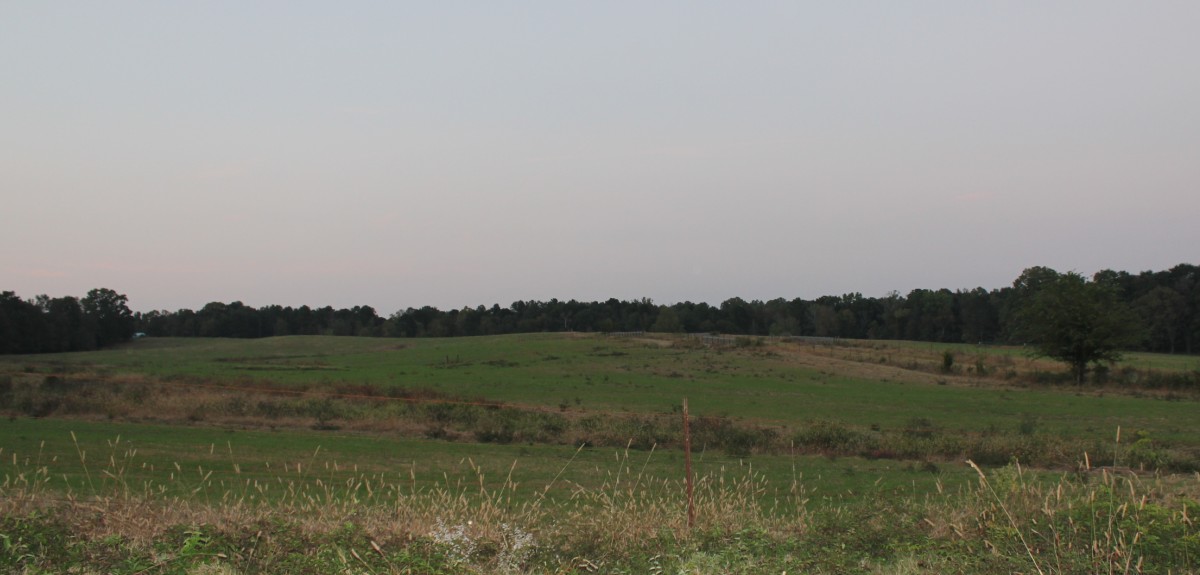
Pemberton was caught at Champion's Hill on May 16th, 150 years ago today. Fighting broke out at 7 am. The Confederates held a strong position, and Pemberton arrayed his men and artillery along the top of a hill. On the Union left and center, McClernand engaged in skirmishing, waiting for the situation to develop. Grant sent Hovey's division from McPherson in on the right to attack the rebels. One soldier remembered:
The fire grew heavier, and the air seemed too hot to be borne. "Forward!" came a second order, all along the line—" Forward! double quick!" Everybody shouted "double quick," as the noise was becoming terrific. ... A moment more and we were at the top of the ascent, and among thinner wood and larger trees. The enemy had fallen back a few rods, forming a solid line parallel with our own; and now commenced, in good earnest, the fighting of the day. For half an hour we poured the hot lead into each others' faces. We had forty rounds each in our cartridge-boxes, and, probably, nine tenths of them were fired in that half hour. For me it was the first real "stand up and fight," as the boys called it, of my life. Of skirmishes, I had seen many, and had been under fire; but this was a real battle, and what Grant himself might have called "business." I tried to keep cool, and determined to fire no shot without taking aim; but a slight wound in the hand ended my coolness, and the smoke of the battle soon made aim-taking mere guessing. ... Hotter and hotter grew the fight, and soon this same boy cried: "Look—look behind us," and, sure enough, the regiment to our left had disappeared, and we were flanked. 
"Stop! halt! surrender!" cried a hundred rebels, whose voices seem to ring in my ears to this very day. But there was no stopping, and no surrender. We ran, and ran manfully. It was terribly hot, a hot afternoon under a Mississippi sun, and an enemy on flank and rear, shouting and firing. The grass, the stones, the bushes, seemed melting under the shower of bullets that was following us to the rear. We tried to halt, and tried to form. It was no use. Again we ran, and harder, and farther, and faster. ... Like ten thousand starving and howling wolves the enemy pursued, closer and closer, and we scarcely dared look back to face the fate that seemed certain. Grant had seen it all, and in less time than I can tell it a line of cannon had been thrown across our path, which, as soon as we had passed, belched grape-shot and canister into the faces of our pursuers. They stopped, they turned, and they, too, ran, and left their dead side by side with our own.
A modern picture at the same location as the above sketch. Source.
 The fighting on the right continued in this fashion, with one line driving the other back and forth. A Federal officer out to reconnoiter discovered that Pemberton's left flank was in the air. But the information was not communicated to Grant, so no action was taken. If he had moved on the flank he could have got in Pemberton's rear and completely destroyed the Confederate army. Grant missing that opportunity didn't assure Confederates safety. Pemberton was reinforcing his left from his right, which was lightly attacked, but when he ordered Loring, who had caused Stonewall Jackson trouble in the Shenandoah Valley, to move to reinforce the left, he refused. Without Loring's troops to aid them, when Grant attacked again, the line crumbled. Pemberton ordered his army to fall back, which they were able to do successfully. It had been a costly battle. The Confederates had lost 381 killed, 1,018 wounded and 2,441 captured. The Federals 410 killed, 1,844 wounded and 187 captured. This was a very important battle. If Pemberton had won, Vicksburg would have been saved. The battle was lost through the failure of Loring to obey orders. The Federals were not without their problems as well. McClernand had not done his share of the fighting and he had not suffered nearly the causalities as McPherson.

Monday, April 29, 2013

Bombardment of Grand Gulf

As the Union troops under Grant worked to capture the Confederate stronghold of Vicksburg on the Mississippi, their next obstacle would be Grand Gulf. The Union transports had run the formidable Vicksburg batteries with little losses, and the army had marched around on the western shore. Now Admiral David Porter with seven ironclads would attempt to silence the Confederate batteries at Grand Gulf, which commanded the Union’s planned beachhead, and then capture them with the troops of John McClernand.
The Union ironclads went out to battle at 8:00 am on April 29th, 150 years ago today. Four of the boats would engage the lower Confederate battery of Fort Wade, and after subduing the rebel guns, they would join the other three ironclads in fighting the upper battery, Fort Cobun. Advancing to within 100 yards, the Union ships opened on the forts. The fight continued until 1:30 pm. The ironclads were successful in subduing Fort Wade, but were unable to achieve the same success at Fort Cobun. The ships took heavy damage. The USS Benton took one shot which killed or injured 25 men. Her steering crippled by a shot to her pilot house, she floated downstream. Seeing the Benton’s danger, Acting Volunteer Lieutenant Hoel of the Pittsburg maneuvered his ship to cover the Benton, taking the fire from the fort while the Benton could be secured.


After five and a half hours of combat and 80 men lost, Porter decided that it was impossible to capture Grand Gulf. This Confederate victory was only a temporary setback for the Federals. It wasn’t long before the infantry crossed further downstream, and Grand Gulf had to be abandoned when threatened from the rear. 


Tuesday, May 21, 2013

Port Hudson Surrounded

The advance on Port Hudson
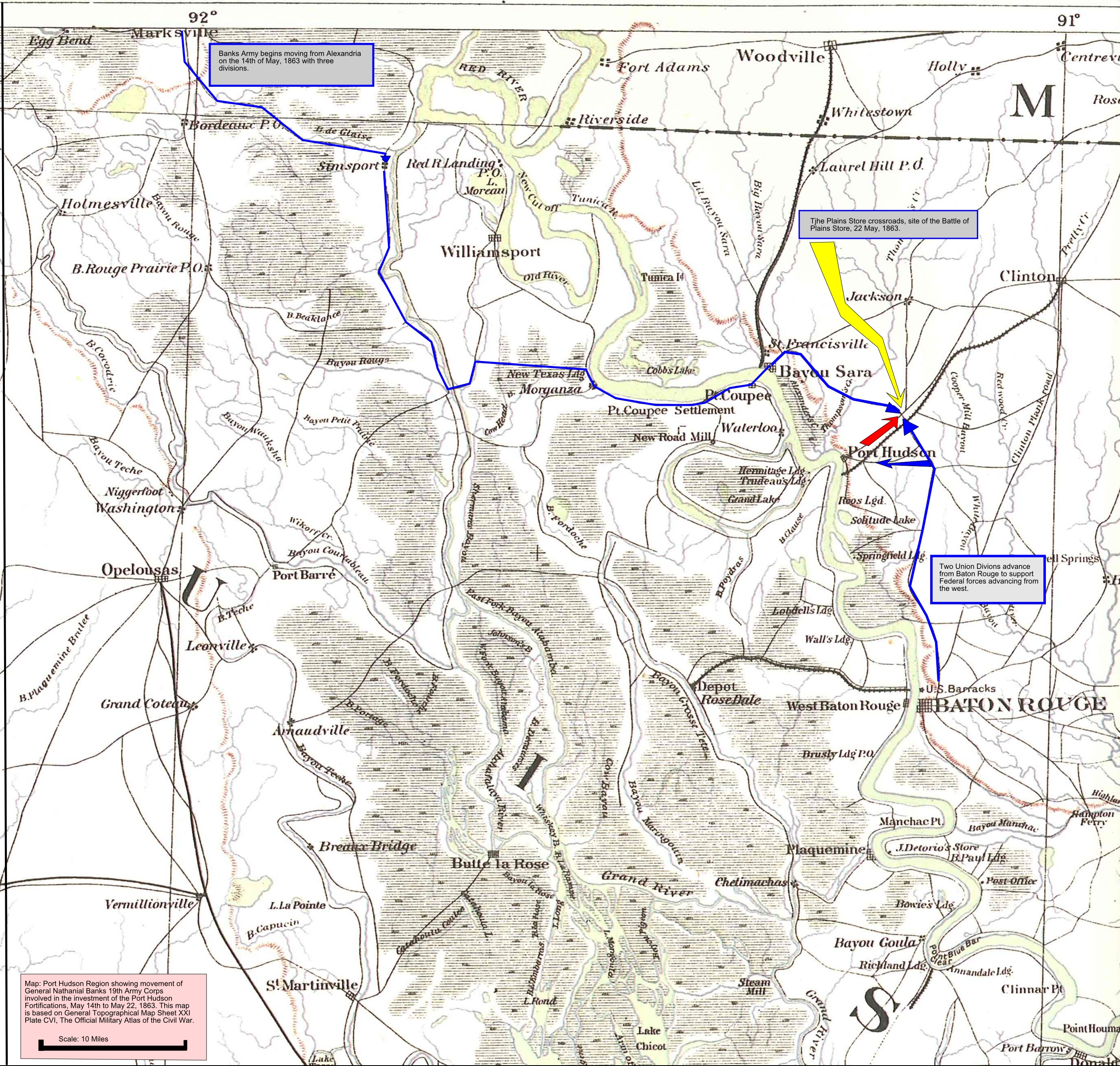
The only point that the Confederates held on the Mississippi River other than Vicksburg, on which Grant was closing, was Port Hudson to the south. But 150 years ago this other bastion was surrounded. The Union army under Nathaniel Banks had moved inland from the river, and now cut off Port Hudson from the rear. He thought he could quickly subdue the garrison under Maj. Gen. Franklin Gardner, and then more north to help Grant capture Vicksburg. As the Yankees advanced they met opposition from a small Confederate detachment under Colonel W. R. Miles. In what was called the Battle of Plains Store, the outnumbered reels gave a good account of themselves. They brought the Federals to a halt, and engaged them for six hours. Finally outnumbered and running out of ammunition, Miles fell back to the Confederate lines. Many of their artillery horses had been killed, so they pulled the guns off by hand, refusing to let them be captured. Port Hudson would put up a better resistance than Banks expected.