head
Showing posts with label Ambrose Burnside. Show all posts

Friday, November 29, 2013

Battle of Fort Sanders


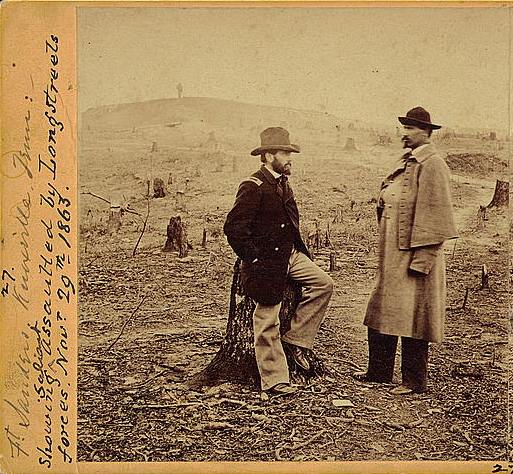
Ambrose Burnside, having gotten ahead of the pursing army of James Longstreet at the Battle of Campbell's Station, arrived in the works around Knoxville, Tennessee on November 17. The Confederates came up as well, and began to consider an attack. Longstreet decided that Fort Sanders was the most vulnerable point on the Yankee line. It was west of the town, positioned at a salient in the earthworks. It was 70 feet high and surrounded by an 8 foot ditch.

The Confederate positions were 2,400 yards from the fort. Longstreet's attack plan called for three brigades to be used. No artillery bombardment would be made, to avoid alerting the Federals of the attack, but this advantage was lost anyway because skirmishers were deployed long before the actual attack was made.


The southerners attacked at dawn on November 29th, after a cold night, with rain and snow falling. Moving out, they encountered obstacles made of telegraph wire which strung to trip the men. Alerted to the attack, the Federals opened fire and began shooting the rebels down. Eventually the Confederates made it to the fort, and jumped down into the ditch. But here they were confronted with a problem. Looking through binoculars at the position, Longstreet saw a Union soldier walking across the ditch. Not realizing that the man was on a narrow plank, he concluded that the ditch was very shallow and that scaling ladders would not be needed. But down in the ditch, the Confederates discovered the truth was much different. It was nearly impossible to climb out of the ditch onto the wall, especially slippery frozen as it was. The Confederates fruitlessly tried to dig footholds in the earth, as the Federals poured musketry into the packed men and stabbed with their bayonets, even tossing down artillery shells as hand grenades. Some southerners made it to the parapet by standing on each others shoulders. Several flags were planted on the top, but no breakthrough was made.

Union engineers on the battlefield
After 20 minutes Longstreet recalled his men. It was one of the most disastrous attacks of the entire war. The attack had been badly planned, and victory was nearly impossible without ladders. The Confederates lost 813 men, the Federals only 13. This reverse. Combined with the defeat of Bragg at Chattanooga, ended the Siege of Knoxville, and the Confederate's attempt to gain control of East Tennessee.

Saturday, November 16, 2013

Knoxville Campaign - Battle of Campbell Station

While the Confederates were concentrating on Rosecrans' army around Chickamauga and Chattanooga, on the Tennessee-Georgia line, Ambrose Burnside took advantage of transfers of Confederate troops away from East Tennessee. He was successful, and in September Cumberland Gap and Knoxville fell to the Federals. The siege of Chattanooga freed up some of the other Confederate troops, and Braxton Bragg sent James Longstreet with his corps to deal with Burnside. Longstreet disagreed with the order, as both parts of the Confederate army would be outnumbered by the Federals they were facing, but he had to go nonetheless.

Burnside had ignored requests to reinforce the Federals in Chattanooga, but as Longstreet advanced toward him he determined to go out and engage him, and fall back slowly to Knoxville, thereby ensuring that Longstreet did not return quickly to aid Bragg. Longstreet's movements were hampered by problems with the railroad, but finally his men were dropped off at Sweetwater, halfway to Knoxville, on November 12. Then commenced a race between the Confederates and Burnside, who had advanced as planned.

The two armies first seriously engaged each other on November 16th, 150 years ago today. The armies marched on parallel roads towards Campbell's Station. Whoever arrived first would control the route to Knoxville. The Yankees arrived there first, but just fifteen minutes later the Confederates showed up. Longstreet tried to hit the Federals on both flanks, and although the Union right was driven back, the attack on the left did not materialize. Burnside ordered his men to fall back, but they had won the first section of the race, and were able to continue on the road to Knoxville. In this fight the Federals lost about 400, the Confederates, 570. 

Saturday, April 13, 2013

Burnside Cracks Down on Copperheads

Burnside
Ambrose Burnside, after his disastrous defeat at the Battle of Fredericksburg, was appointed commander of the Department of Ohio. From there he set out to deal with the Copperheads, the Northern Democrats who wanted to bring an end to the war. 150 years ago today he issued his General Order No. 38, prescribing harsh punishments for those who helped the Confederacy:
[H]ereafter all persons found within our lines, who commit acts for the benefit of the enemies of our country, will be tried as spies or traitors, and if convicted will suffer death. This order includes the following class of persons.

Carriers of secret mans.

Writers of letters sent by secret mails.

Secret recruiting officers within the lines.

Persons who have entered into an agreement to pass our lines for the purpose of joining the enemy.

Persons found concealed within our lines, belonging to the service of the enemy, and, in fact, all persons found improperly within our lines who could give private information to the enemy. All persons within our lines who harbor, protect, conceal, feed, clothe, or in any way aid the enemies of our country.

The habit of declaring sympathies for the enemy will no longer be tolerated in this Department. Persons committing such offences will be at once arrested with a view to being tried as above stated, or sent beyond our lines into the lines of their friends.

It must be distinctly understood that treason expressed or implied, will not be tolerated in this Department.
Vallandigham
This order was directed not only at those who were doing legitimately treasonous things, such as recruiting for the Confederacy, but also those who even so much as expressed sympathy for the Confederate cause. It didn’t take long for Burnside to implement this, with the arrest of Clement Clement Vallandigham, the leading Copperhead politician, and the closing of the Chicago Tribune. Burnside and the government would meet a lot of backlash for this order, and the actions taken because of it.

Saturday, January 26, 2013

Joe Hooker Takes Command

Hooker
Ambrose Burnside's Mud March, as it was called, was the last straw for Lincoln. Burnside had been disastrously defeated at the Battle of Fredericksburg in December, and with the latest debacle he had to be replaced. He was moved to the Department of the Ohio and replaced with Joseph Hooker on January 26th.

Hooker was a West Pointer from Massachusetts. He had fought in the Mexican-American War and served the staffs of the leading American generals. In the Civil War, he had quickly risen to prominence, and was known as Fighting Joe because of a typo in a newspaper article, but the name stuck because of his aggressiveness. Hooker was also famous for his hard drinking. One officer recorded that “the headquarters of the Army of the Potomac was a place to which no self-respecting man like to go, and no decent woman could go. It was a combination of bar-room and brothel."
Hooker
Lincoln wrote a letter to Hooker upon giving him the command giving him his instructions:
I have placed you at the head of the Army of the Potomac... And yet I think it best for you to know that there are some things in regard to which, I am not quite satisfied with you. I believe you to be a brave and a skillful soldier, which, of course, I like. I also believe you do not mix politics with your profession, in which you are right. You have confidence in yourself, which is a valuable, if not an indispensable quality. You are ambitious, which, within reasonable bounds, does good rather than harm. But I think that during Gen. Burnside's command of the Army, you have taken counsel of your ambition, and thwarted him as much as you could, in which you did a great wrong to the country, and to a most meritorious and honorable brother officer. I have heard, in such way as to believe it, of your recently saying that both the Army and the Government needed a Dictator. Of course it was not for this, but in spite of it, that I have given you the command. Only those generals who gain successes, can set up dictators. What I now ask of you is military success, and I will risk the dictatorship. The government will support you to the utmost of it's ability, which is neither more nor less than it has done and will do for all commanders. I much fear that the spirit which you have aided to infuse into the Army, of criticizing their Commander, and withholding confidence from him, will now turn upon you. I shall assist you as far as I can, to put it down. Neither you, nor Napoleon, if he were alive again, could get any good out of an army, while such a spirit prevails in it. And now, beware of rashness. Beware of rashness, but with energy, and sleepless vigilance, go forward, and give us victories.

Sunday, January 20, 2013

Burnside's Mud March


After his disastrous defeat at Fredericksburg in December, Burnside looked for a new way launch an offensive. He did not plan to put his army in winter quarters, as would normally be done, but instead strike to restore his reputation and the morale of the army and the nation. He planned to move in the first days of January. Feinting at the fords upstream of Fredericksburg, the main army would cross seven miles downstream. At the same time, he would send the cavalry on a large scale raid. Up to this point in the war, the Confederate cavalry under JEB Stuart literally rode circles around the Union cavalry, which was of a much lesser quality. However, as soon as Burnside was prepared to move, he received a message from Lincoln, saying that “no major army movements are to be made without first informing the White House."
Burnside
Burnside had only told his plans to a few close confidants, so he knew someone had told the President. He was right. Brigadier Generals John Newton and John Cochrane had taken leave and gone to Washington. There they had the opportunity to meet with the President. They told him that the Army of the Potomac had no confidence in Burnside and that if Burnside attempted to move, the army would fall apart. It was this meeting which inspired Lincoln's telegram. Burnside came to the White House to investigate. He wanted to court marshal the generals, but Lincoln would not reveal their identities. Burnside resigned, “to relieve you from all embarrassment in my case,” but Lincoln did not accept it. Although Burnside was in many ways incompetent as a general, unlike McClellan he recognized his mistakes and accepted responsibility for them.
Lincoln
After this altercation with Lincoln, Burnside revised his plan. He switched the locations, feinting to the downstream of Fredericksburg, and crossing at the United States Ford upstream. The move began on January 20th, 150 years ago. The weather had been good up to this point, but once the army started moving this quickly changed. On the night of the 20th, it began to rain. The rain continued to fall over the next days, turning the roads into quagmires, streams into rivers and rivers into rushing torrents. For several days, the soldiers foundered in the mud, making no progress. Burnside finally ordered the army to return to its camps, as by now he knew Lee had been alerted to his move. The soldiers remembered the march with a ditty:
Now I lay me down to sleep 
In mud that's many fathoms deep. 
If I'm not here when you awake 
Just hunt me up with an oyster rake

Monday, December 17, 2012

Burnsides Retreats

On December 15th the Union army retreated, two days after the defeat at the Battle of Fredericksburg. Lee had won the most lopsided victory of the war. Burnside had chosen to cross the Rappahannock River and attack where Lee was prepared for him. Instead of focusing his efforts where he achieved a temporary breakthrough, he continued throwing his men forward in hopeless and bloody assaults against the Sunken Road. The Union army and nation lost all their confidence in Burnside. One northern war correspondent wrote:
It can hardly be in human nature for men to show more valor, or generals to manifest less judgment than were perceptible on our side that day.
A soldier said:
Almost everyone was cursing Burnside as the author of the defeat at Fredericksburg. At the Reviews when he rode along the lines & the Colonels would call out--'Three cheers for Burnside' the men would stand silent & sullen or mutter curses against him.
Although Burnside had been badly defeated, Lincoln had not lost confidence in him. He would remain in command of the Army of the Potomac.

Friday, December 14, 2012

Aftermath of the Battle of Fredericksburg

The day after his disastrous defeat in the Battle of Fredericksburg, General Burnside wanted to renew the assault, leading the attack personally at the head of his old corps. His subordinates, however, were able to talk him out of it.

The day after the battle, the troops remained in position, the dead and wounded still lying where they had fallen. All across the field, the Federal troops were crying for water. Finally Sergeant Richard Kirkland could stand it no longer and went to see Joseph Kershaw, commanding Cobb's brigade. Kershaw wrote:
"All night and all day I have heard those poor people crying for water, and I can stand it no longer. I come to ask permission to go and give them water" [Kirkland said.] The General regarded him for a moment ... and said "Kirkland, don't you know that you would get a bullet through your head the moment you stepped over the wall?" "Yes, sir," he said, "I know that; but if you will let me, I am willing to try it." ... [T]he General said, 'Kirkland, I ought not to allow you to run a risk, but the sentiment which actuates you is so noble that I will not refuse your request, trusting that God may protect you. You may go.' ... With profound anxiety he was watched as he stepped over the wall on his errand of mercy -- Christ-- like mercy. Unharmed he reached the nearest sufferer. He knelt beside him, tenderly raised the drooping head, rested it gently upon his own noble breast, and poured the precious life-giving fluid down the fever scorched throat. This done, he laid him tenderly down, placed his knapsack under his head, straightened out his broken limb, spread his overcoat over him, replaced his empty canteen with a full one, and turned to another sufferer. By this time his purpose was well understood on both sides, and all danger was over. From all parts of the field arose fresh cries of "Water, water; for God's sake, water!" More piteous still the mute appeal of some who could only feebly lift a hand to say, here, too, is life and suffering. For an hour and a half did this ministering angel pursue his labor of mercy, nor ceased to go and return until he relieved all the wounded on that part of the field. He returned to his post wholly unhurt. Who shall say how sweet his rest that winter's night beneath the cold stars!
A truce was finally called for Burnside to remove his wounded and care for them.

Thursday, December 13, 2012

Battle of Fredericksburg – Sunken Road

On the Confederate left the fight began at 11:00 am, when the Confederate artillery opened in an attempt to relieve pressure on the left. The Union artillery across the river replied and an artillery duel commenced. Corps commander James Longstreet, for one, earnestly hoped that Burnside would attack. Two hundred yards from the town was a canal, which the Federals could only cross by three narrow bridges. From there it was 400 yards and about 50 feet up to the Confederate line on Marye's Heights. There the men were placed in the sunken Telegraph Road. This natural entrenchment was improved with a 4 foot stone wall, and in some places a breastwork was even added on top of that. 2,000 Confederates were positioned along this line, with seven thousand more in reserve. It was a very, very strong position. Longstreet's chief of artillery reported:
General, we cover that ground now so well that we will comb it as with a fine-tooth comb. A chicken could not live on that field when we open on it.
Sumner's Attack
The first Union attack was launched at noon, with men from Sumner's grand division. They crossed the canal beyond the town, and hid behind a bluff, ordering their ranks for their changed. When they marched forward they were a grand display. They marched in perfect line of battle, with bayonets fixed, advancing toward the rebels. James Longstreet wrote of the scene:
The field was literally packed with Federals from the vast number of troops that had been massed in the town. From the moment of their appearance began the most fearful carnage. With out artillery from the front, right, and left tearing through their ranks, the Federals pressed forward with almost invincible determination, maintaining their steady step and closing up their broken ranks. Thus resolutely they marched upon the stone fence behind which quietly waited the Confederate brigade.... As they came within reach of this brigade, a storm of lead was poured into their advancing ranks and they were swept from the field like chaff before the wind. A cloud of smoke shut out the scene for a moment, and, rising, revealed the shattered remnants of a gallant, but hopeless charge.
Confederates at the Sunken Road
The Union battle line was decimated by Confederate volleys from the sunken road. 25% of the men in those lines were hit. The formation began to break at 125 yards from the wall, and no one came within 40 yards. The survivors could not even retreat. The Confederate fire was so heavy they clung to the hillside, hoping for a chance to get away. One Yankee remembered:
No one who has not witnessed such a scene can form any idea of the awfulness of that hour, the fearful screeching of the shells, the ominous buzzing and vicious whistling of canister and the endless 'ping ping' of the minie balls, while the reports of the musketry was one continual crash and, far above all, the thunderous tones of hundreds of cannon, completely drowned the encouraging shouts of the officers. The whole line was eveloped in a cloud of sulphurous smoke, almost hiding the regiments from each other and through which crimson flames from muskets and cannon darted fiery tongues. What carnage! comrades fell all around you, mangled and bleeding; the colors go down, but are raised to fall again and again, the line moves forward with decreasing speech until when past the centre of the plain it finally stops, fires a few spasmodic volleys, wavers, breaks and flees to the protection of the bank from whence it had started. Then, without delay, it re-forms, moves up the bank and the tragedy is renacted. Once more the scattered remnants form a regimental line and are led forward with the same result.
Union Attack
Two more brigades were sent forward to renew the attack. They suffered the same fate, half of the men being killed and wounded by the Confederate fire. The Confederates were often four deep along the Sunken Road. The men in the back would load rifles, handing them up to the men in front to fire, handing the weapons back to repeat the process. This meant they could pour a tremendous fire into the Federal ranks. An entire division had been sent forward, but they were stopped in their tracks and pinned down by the Confederate fire. Another division, that of Winfield Hancock, was sent in and they met the same fate. One of Hancock's units was the Irish Brigade under Thomas Meagher, a Irish revolutionary who had been exiled, and escaped from prison into the United States. It was made up of three New York regiments two others from Massachusetts and one from Pennsylvania. It was formed of Irish immigrants in the large northern cities. On the Confederate side of the line one of the regiments of Cobb's brigade was an Irish regiment. These two Irish units met on the fields of Fredericksburg. A northern Irishman wrote of the fight:
Officers and men fell in rapid succession. Lieutenant Garret Nowlenfell with a ball through the thigh. Major Bardwell fell badly wounded; and a ball whistled through Lieutenant Bob McGuire's lungs. Lieutenant Christian Foltz fell dead, with a ball through the brain. The orderly sergeant of Company H wheeled around, gazed upon Lieutenant Quinlan, and a great stream of blood poured from a hole in his forehead. ... No cheers or wild hurrahs as they moved towards the foe. They were not there to fight, only to die.
The Union Irish brigade was unsuccessful in its attack upon the Confederate Irish. They went into battle with 1,200 rifles, and when they rallied the next morning only 230 were left. 14 of its 15 field officers were gone. More men would straggle in later, but the brigade was a shadow of its former self.
Sunken Road

Two entire divisions had attempted to break the Confederate line, but all had failed, leaving the soldiers clinging to the ground. A third division, that of Major General O. O. Howard was sent in. The original plan war to send them to the right in an attempt to strike the Confederate left, but after receiving messages from the two divisions on the field urgently requesting help, the corps commander, Darius Couch, decided to send them straight up the hill. The regimental history of the 19th Massachusetts recorded of the advance:
The waiting line closes up, belts are tightened, all extra weights thrown away. Silence falls upon the ranks, for all know that they must traverse those heaps of dead; that they, too, must soon face that storm of death. They wait, and at last the order comes to advance. ... The wounded were moving to the rear in crowds, a sickening sight. The houses soon were further and further apart but the shells, on the contrary, came nearer and nearer. The air was full of missiles. Soon some fences were encountered and the men hastily crawled over, through or under them and then crossed several yards surrounding some of the hoses. Soon they reached the canal which intersects the city and found the bridges were crowded with fugitives, wounded men and stretcher bearers. The regiment pushed across the ditch, down one side and up the other, - and hurried forward, but soon filed to the right and formed in line of battle in a field, under cover of a steep bank.... The line of the Nineteenth Massachusetts had hardly formed when Capt. Weymouth ordered 'Forward.' Up the ascent they sprang, and on toward the ... enemy. The plain over which they had to charge was some four hundred yards in width and had gradual rise to the base of the Heights. With its colors well to the front, the regiment, - a mere handful of men, - advanced across the plain. ... When the men reached the crest of the bank they were in full view of the enemy's works from which the batteries and infantry opened upon them with such effect as literally to sweep them, reeling and staggering, back to cover. Shells and canister poured down upon them like rain, for not only did the line have to withstand the awful fire from the front, but was subjected to an enfilading fire from the batteries on the rebel left.

In the midafternoon there was a pause from these terrific assaults. Longstreet wrote:
Gen. Lee, who was with me on Lee's Hill, became uneasy when he saw the attacks so promptly renewed and pushed forward with such persistence, and feared the Federals might break our lines. After the third charge he said to me 'General, they are massing very heavily and will break your line, I am afraid.' 'General I replied, if you put every man now on the other side of the Potomac on that field to approach me over the same line, and give me plenty of ammunition, I will kill them all before they reach my line.'
Hooker's Attack

Burnside's attacks had failed. Four divisions had been broken trying to do what he had planned for one. 5,000 men were killed or wounded, and many of the survivors were lying on the ground to avoid the Confederate bullets. But against all reason he decided to continue the attacks. He ordered Joseph Hooker's Grand Division to attack, and the battle was resumed, with the same results. Every quarter of an hour another attack was launched, supported by artillery, but every one was a failure. The Washington Artillery from New Orleans, on the top of Marye's Heights, had been firing throughout the action, breaking up the Union charges. But now they were running out of ammunition. However other cannon were available and so they were pulled to the rear, and other guns were brought up, which continued to fire into the advancing blue lines. The Federal attacks continued until twilight. When they finally were stopped, the field was covered in blue bodies, in some places three thick. A few troops had made it within 25 yards, but not a man had reached the wall. Fourteen brave attacks had been made, but they were all failures. Looking upon the scene, Lee uttered his famous line, “It is well that war is so terrible, else we should grow too fond of it.” 6,000 to 8,000 Federals had fallen in this assault, while only 1,200 Confederates were hit. As night came many Federals were still lying on the field, unable or unwilling to retreat. One of them was Colonel Joshua Lawrence Chamberlin of the 20th Maine
[O]ut of that silence rose new sounds, more appalling still. A strange ventriloquism of which you could not locate the source. A smothered moan as if a thousand discords were flowing together into a keynote - weird, unearthly, terrible to hear, and bare - yet startling with its nearness. The writhing concord broken by cries for help - some begging for a drop of water, some calling on God for pity, and some on a friendly hand to finish what the enemy had so horribly begun. Some with delirious, dreamy voices murmuring loved names as if the dearest were bending over them. And underneath, all the time, the deep bass note from closed lips, too hopeless or too heroic to articulate their agony. At last, cold and depressed, I move two dead men a little and lay down between them, making a pillow of the breast of a third, drew the flap of his overcoat over my face and tried to sleep.
During the night the Northern Lights appeared, filling the sky with tongues of fire. Rare this far South, the Confederates saw it as a sign from God commending their victory.

Wednesday, December 12, 2012

Battle of Fredericksburg – Plan of Attack

Burnside
On December 12th, 150 year ago today, the Federals, as on the previous day, began with a bombardment. They crossed the river on the pontoon bridges they had built, and began digging rifle pits. Examining the Federal movements, Lee decided that this was indeed the real attack. He had been slow to arrive at that conclusion because he did not think Burnside would be foolish enough to attack Fredericksburg directly. But now he finally resolved to order up Stonewall Jackson's forces, which had been scattered to guard a large area. The two days Burnside had spent in preparing for the attack had thrown his plans into disarray and given Lee time to bring up his entire army. If he had attacked immediately, he may have caught Lee more off guard and had a better chance of success.
Battle overview

Burnside examined Lee's 8 mile long line and saw that it bowed inwards in the center. He could not attack there without coming under crossfire from the flanks. That left the two flanks, and he decided to attack both. However, his orders were not for the forceful attack his subordinates expected. Franklin, on the Union left, was instructed to send forward at least one division to seize the high ground, as was Sumner, supported by Hooker, on the right. Burnside thought that he would simply be able to brush Lee off without committing all of his forces. He would find out the next day how wrong he was.

Tuesday, December 11, 2012

Battle of Fredericksburg - Day 1

Movement to Fredericksburg
Burnside had moved his army to Fredericksburg in a hope to quickly cross the river and get around Lee's flank. But his plan had failed when the pontoon bridges did not arrive, and he did not move quickly to find another way across the river. Now, as the Federals began their river crossing 150 years ago today, they were facing Lee's entire army on the heights across the river.
Pontoons

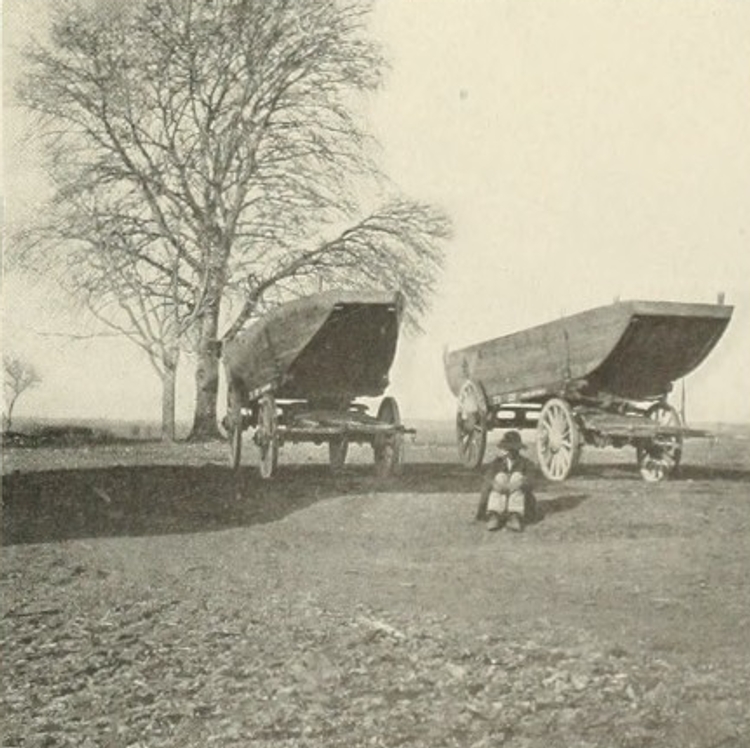
Burnside had several options for crossing the Rappahannock River, but he chose the one he thought would be least expected. Instead of attempting a flanking movement, he would strike directly across the river into Fredericksburg, hoping that Lee by guarding other crossings had weakened his center enough for Burnside to have a chance there. Fredericksburg would be a tough nut to crack. On either side of the river were high bluffs, Strafford Heights on the Federal side and Marye's Heights on the Confederate, and in between on the southern side of the Rappahannock was the town of Fredericksburg. Lee had over 70,000 men in his two corps, half the number of Burnside. They had recovered from their reverse at Sharpsburg and had, increased in numbers and morale. They were confident that they could put up a good fight and whip the Union army, even with its new commander.
Pontoon Crossings at Fredericksburg

On December 11th, 150 years ago today, the Union engineers began working to assemble the pontoon bridges around Fredericksburg. Their work would not go on unopposed. Guarding the town itself was the Mississippi Brigade of Brigadier General William Barksdale. His sharpshooters, hidden in the houses of the town, were well positioned to shoot down the Yankees working on the bridge. The Federals tried to meet this threat with an impressive bombardment, 150 cannon raining down shells into the town. But the Mississippians, protected by the houses, were mostly unhurt by the fire.

As the guns died down, the bridge builders rushed forward. Barksdale's men picked them off with their rifles, foiling several efforts to put the six pontoon bridges across the river. Lee had told Barksdale that he was free to retire, as all was ready on the heights to receive a Union attack, but Barksdale replied, "Tell General Lee that if he wants a bridge of dead Yankees, I can furnish him with one!" The Mississippians drove back nine Federal attempts to cross the river.
Henry Hunt

At this juncture Burnside was convinced by his artillery commander, Brigadier General Henry Hunt, to send landing parties across in boats to establish bridgeheads and clear out the sharpshooters. Colonel Norman Hall volunteered his brigade, and with the army commander's approval, set off in small boats. Although losing some men along the way, they were able to dash across the river, land and began a fierce house to house fight with the rebels. Falling back slowly, in constant contact with the Union troops, Barksdale did not return to the safety of the Confederate lines until after dark. One small Mississippi brigade had held up the entire Union army for a day. But it would take more than that for the Confederates to prevail in the coming days of the Battle of Fredericksburg.
William Barksdale

Wednesday, November 21, 2012

Burnside Demands Fredericksburg's Surrenders

Burnside's Headquarters
When McClellan was removed from command he was replaced by Ambrose Burnside. Burnside had long been a commander in the Army of the Potomac, and although he was a friend of McClellan and did not want the command, he was eventually persuaded to take it. Rather than following McClellan's example of slow movement, Burnside instead would move very quickly. His plan was to move to Fredericksburg, cross the river, and get around Lee's flank. Burnside was successful in arriving at the river before Lee, but his plan went awry in a critical area – the pontoon bridges to actually cross the river did not arrive. He had to remain there waiting for weeks while Lee could slowly decide where he could place his troops. For a while he had to cover many crossings as he did not know where the Yankees would cross, but by the time Burnside actually did cross at Fredericksburg he would have all his troops in position. The failure of Burnside to insure his pontoons arrived on time, or to move on without them, cost him an easy crossing. He wrote:
Had the pontoon bridge arrived even on the 19th or 20th, the army could have crossed with trifling opposition. But now the opposite side of the river is occupied by a large rebel force under General Longstreet, with batteries ready to be placed in position to operate against the working parties building the bridge and the troops in crossing.
Outskirts of the town
On November 21st, 150 years ago today, Burnside demanded the surrender of the town. Fredericksburg was one of the oldest towns in Virginia, and George Washington had lived just across the river. A bombardment of the town would be a catastrophe, deadly to the non-combatants in the town. This crisis was avoided for the moment when the Yankees relented from their treat upon Lee's assurance that he would not occupy the town. However, the citizens knew the armies would come their way sooner or later, and so the exodus from the town began, long lines of women and children leaving the town, carrying with them what good they could. Lee wrote of their conduct:
History presents no instance of a people exhibiting a purer and more unselfish patriotism or a higher spirit of fortitude and courage than was evinced by the citizens of Fredericksburg. They cheerfully incurred great hardships and privations, and surrendered their homes and property to destruction rather than yield them into the hands of the enemies of their country.

Monday, September 17, 2012

Battle of Antietam – Burnside's Bridge

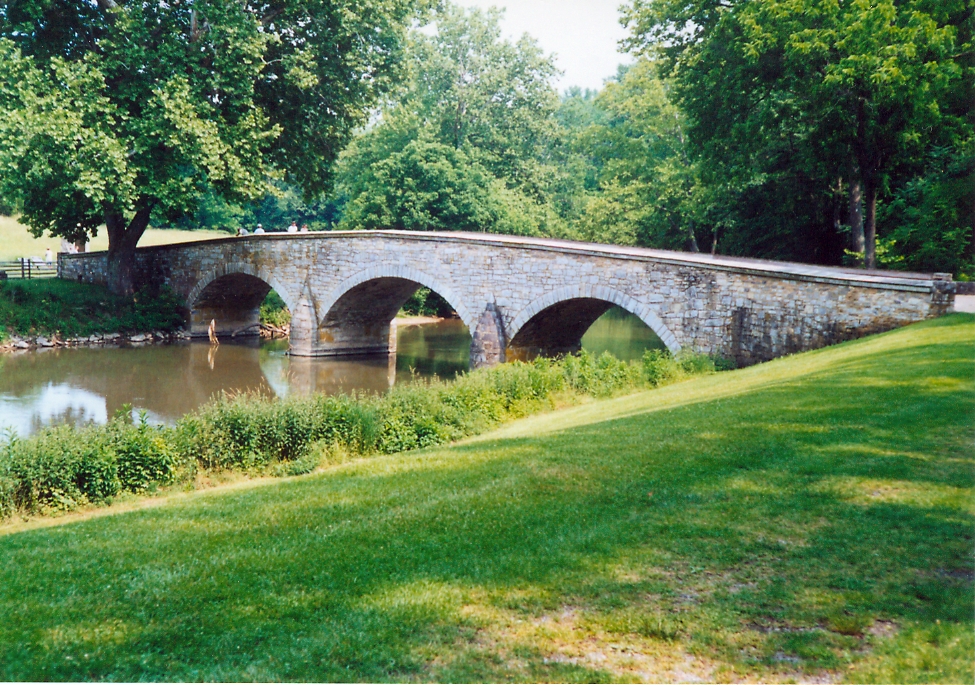
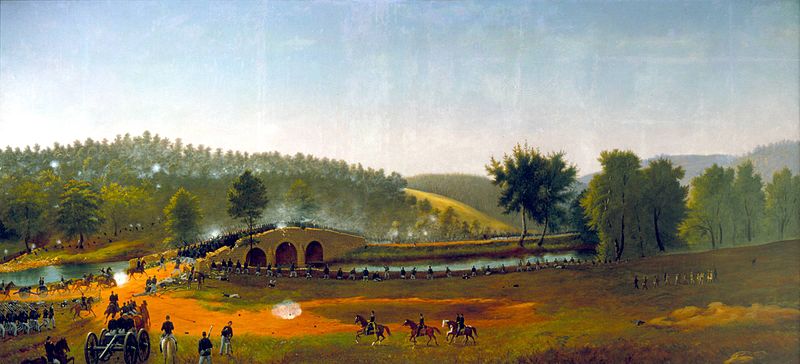
As the fighting around the Sunken Road died down on the Confederate right the battle continued. Burnside had been ordered to make a crossing of the creek and assault the Confederate line. Although he started early in the morning, not a man of his command had crossed the bridge before the battles on the left and center had wound down. Burnside had over 12,000 men and 50 cannon. All the Confederates had to stand up to him on the wide front to the right of D. H. Hill was the division of D. R. Jones. He had only 3,000 men and 12 cannon. All the rest of the troops in the area had been rush to the left to meet the attacks of Hooker, Sumner and Mansfield. The only troops positioned to guard the actual crossing was the 400 man brigade of Richard Toombs. The rest of Jones's force was positioned on Cemetery Ridge to the West. Toombs however held a strong position. At this point 100 foot bluffs rose very close to the creek, creating a good defensive position. Burnside focused his efforts to cross the creek on the lower or Rohrback's bridge, which would later be renamed after Burnside. The road ran along the side of the creek towards the bridge, giving the Confederates amble time to pick off advancing bluecoats. The creek at this point is only 50 feet wide, and there were many places Burnside could have sent his men across without being subjected to the Confederate fire. But while he did send a division down stream to look for a crossing point, he still spent much time and blood attempting to force this bridge. Henry Kyd Douglas, a staff officer for Stonewall Jackson, wrote this:
Since early morning General Ambrose E. Burnside with a crops of 13,000 men had been lying on the opposite side of the Antietam, looking for an opportunity to get across a bridge, which is now - is it sarcasm? - called Burnside's Bridge. Why the bridge? It was no pass of Thermopylae. Go look at it and tell me if you don't think Burnside and his corps might have executed a hop, skip and up and landed on the other side. One thing is certain, they might have waded it that day without getting their waist belts wet in any place.
None the less at 10 am Burnside began sending his troops forward in an attempt to capture the bridge. He planned or the 11th Connecticut to cover the bridge with their fire while a brigade from Ohio under Colonel George Crook would charge across. When the 11th Connecticut was opened on by Toomb's men within 15 minutes they were in retreat, having lost 140 men, a third of their strength. Meanwhile Crook's brigade got lost and never made it to the bridge. The attack was a decided failure. Burnside ordered another attack at 10:45, for the 16th New Hampshire and 2nd Maryland to charge down the road along the creek and across the bridge. One man of the 6th New Hampshire recorded the battle:
The road occupied by our troops came down to the creek nearly three hundred yards below the bridge; thence, turning at right angles, it ran along the bank, with only the narrow stream between it and the enemy's position, and then turned again at right angles to cross the bridge. The opposite bank was a steep, high bluff, covered on its stop and sides with forest trees. Behind these trees, and behind barricades of stone and logs, the rebels were strongly posted, their fire covering every inch of ground over which our troops must march to reach the bridge.
The two regiments were formed in a field below where the road came down to the creek, and some sixty or seventy rods below the bridge. ... They fixed bayonets, and moving at the double-quick, passed through a narrow opening a strong chestnut fence ... and charged in a most gallant manner directly up the road toward the bridge. As the attacking party, led by Colonel Griffin, debouched from the field into the road, the rebels, from their intrenched position, redoubled the fury of their fire, sweeping the head of the column with murderous effect. Of the first hundred men who passed through the opening of the fence, at least nine tenths were either killed or wounded. Such sweeping destruction checked, of course, the advancing column, but the men sheltered themselves behind logs, fences, and whatever other cover they could find, and bravely held the ground already gained.
Burnside had again failed the capture the bridge, the Confederate fire was too heavy for his men. All the time McClelling was sending Burnside messages urging him to attack, such as, "Tell him if it costs 10,000 men he must go now.” Burnside became annoyed by these messages. He snapped at one courier, "McClellan appears to think I am not trying my best to carry this bridge, you are the third or fourth on who has been to me this morning with similar orders."

At around 1 o'clock Burnside sent another attack forward. They had better artillery support, and charged straight down the bluff. With a rush they made it across the bridge, and laid down a fire on the Confederates. Toombs decided that it was time to retreat. His men were running low on ammunition, and his flank was being threatened by a division who were crossing the creek downstream. He fell back, having held back an entire corps for many hours with a few hundred men. They had killed or wounded 500 Yankees, loosing only 160 themselves. After forcing Toombs back, Burnside's attack stalled. He spent two hours moving his troops across the bridge and supplying them with ammunition. Although Burnside did not know it, every minute counted. Lee had no troops with which to reinforce Jones's weak division other than artillery. His only hope was for the arrival of A. P. Hill from Harper's Ferry. Every minute Burnside spent in preparing for his attack was another another minute closer to A. P. Hill's arrival. Burnside finally advanced at 3:15. Greatly outnumbered, Jones's men fought hard. They fired as fast as they could into the advancing Federals. A Union soldier wrote of the charge, saying,
The prospect was far from encouraging, but the order came to get ready for the attempt. Our knapsacks were left on the ground behind us. At the word a rush was made for the fences. The line was so disordered by the time the second fence was passed that we hurried forward to a shallow undulation a few feet ahead, and lay down among the furrows to re-form, doing so by crawling up into line. ... The battery, which at first had not seemed to notice us, now, apprised of its danger, opened fire upon us. We were getting ready now for the charge proper, but were still lying on our faces. Now and then a bullet from them cut the air over our head, but generally they were reserving their fire for that better show which they knew they would get in a few minutes. The battery, however, whose shots at first went over our heads, had depressed its guns so as to shave the surface of the ground. Its fire was beginning to tell. ... The suspense was only for a moment, however, for the order to charge came just after. Whether the regiment was thrown into disorder or not, I never knew. I only remember that as we rose, and started all the fire that had been held back so long was loosed. In a second the air was full of the hiss of bullets and the hurtle of grape-shot. The mental strain was so great that I saw at that moment the singular effect mentioned, I think, in the life of Goethe on a similar occasion - - the whole landscape for an instant turned slightly red.
The Confederates put up a good fight, but they had no chance. They were overlapped on their flank and greatly outnumbered. The Federals pushed on, coming over the ridge, sending fugitives running through the streets of Sharpsburg. Burnside's men were only 1200 yards away from  Finally, not a moment too soon, A. P. Hill's column from Harper's Ferry arrived. Hill had started his march that morning. Ignoring for the day Jackson's standing orders to halt ten minutes out of the hour, he pressed the men on, knowing that worn out men at the right moment would be better than rested men too late. Wearing his customary red battle shirt, he urged on men with his sword who faltered by the way. 2000 of his 5000 men had fallen by the wayside, but the rest arrived just in time. Riding onto the field Hill saw a Lieutenant hiding behind a tree. Riding up to the man, he broke the officers sword over his back. When General Lee met him he embraced him, and said, "General Hill, I was never so glad to see you, you are badly needed, put your force in on the right as fast as they come up."
A. P. Hill
Hill began positioning his brigades as soon as they arrived on the field. At around 4 he moved forward striking the Federals hard in the flank. Many of the men were wearing Federal uniforms captured at Harper's Ferry. The green Federal regiments were the size of Hill's brigades, but they were surprised by his attack. Hill's men struck hard, collapsing through the green regiments and pushing them back with rebel yells. Burnside's troops pulled back to the edge of the bridge, and they stayed there for the rest of the battle.
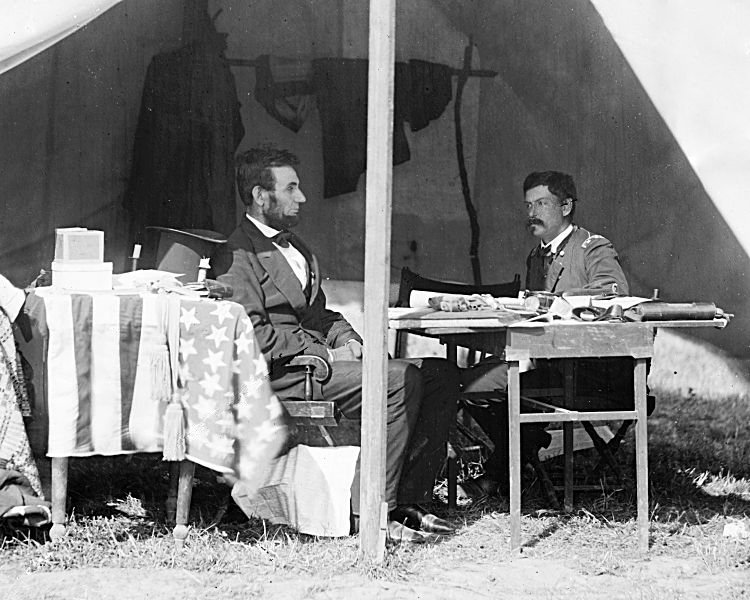
Lincoln meets with McClellan on Antietam Battefield

Wednesday, March 14, 2012

Battle of New Bern

Federal gunboats
150 years ago today Burnside's expedition captured the Confederate position at New Bern, North Carolina. Roanoke Island fell in early February, and Burnside planned to move on to New Bern, the most important city in the area. New Bern was commanded by General Lawrence Branch, and he had only 4000 men to resist the Federal invasion. Burnside had 11,000 men accompanied by a fleet of gunboats. The Confederates took up there defense along a line of breastworks six miles below the town, with their left at Fort Thompson on the Neuse River, and their right on a road. Before reaching the Confederate position Burnside's men would have to cross a swamp and cross obstacles such as felled trees. Burnside's line moved forward against the Federal position on the morning of March 14th.
Battle Map
Unfortunately for the Confederates, there was a serious problem in their line. At the railroad in the center of the line there was a gap into which the Union troops charged. They broke several regiments by attacking their flanks, but their attacks stalled and Branch brought up reinforcements to plug the gap. Burnside ordered his reserves forward, and the entire Confederate line broke. Branch's men abandoned New Bern and continued to retreat and could not be stopped until they reached Kinston, 35 miles from the battlefield. In this battle the Confederates suffered 64 killed, 101 wounded and 413 captured, the Federals 90 killed, 390 wounded and 1 missing.

Thursday, February 9, 2012

Battle of Roanoke Island – Day 2


After having landed the night before, Burnside's 10,000 Federal troops moved toward the Confederates forts on the morning of February 8th. They encountered the Confederate forces in position along a swampy part of the island. 400 troops held a redoubt with three cannons, with supposedly impenetrable swamps on either side. 1,000 more Confederates were behind them in reserve. For two hours the first Union brigade attempted to break the Confederate position, but all their efforts were useless. The larger Union force could not all be put into position in the restricted area.

When the second brigade arrived its commander suggested an attempt to be made to flank through the impenetrable swamps. This was done with two forces attempting to flank on both sides of the Confederate position. Although uncoordinated, they were both able to march through the swamp to strike the Confederates at the same time. As they appeared, the Union center attacked as well. Under this unexpected attack from three directions, the Confederates broke and ran.

With no further defensive positions and being greatly outnumbered by the Union troops, Colonel Shaw, the Confederate commander decided to surrender. The North had lost 37 killed, 214 wounded and 13 missing, the South 23 killed, 58 wounded and 62 missing. 2,500 men surrendered, along with 40 cannons from the fort. Several regiments of reinforcements had arrived after the battle, but soon enough to be surrendered. The capture of Roanoke Island gave the Federals a location from which to launch attacks on other locations in North Carolina. Colonel Shaw wrote this in his official report:
I cannot close this report without giving expression to the deep grief which I feel on account of the disaster which has befallen us, and at the same time expressing the earnest hope that the Great Being who holds the destinies of nations in the hollow of His hand will soon enable us to retrieve the losses we have sustained.

Wednesday, February 8, 2012

Battle of Roanoke Island

Landing
Burnside's expedition to attack Roanoke Island, North Carolina encountered rough weather on the way. To encourage his men, Burnside took up quarters in the worst ship in the fleet. Three vessels were wrecked and their crews rescued, but Burnside's boat arrived safely. Pamlico Sound was shallower than had been thought, and so significant time was spent either lightening the ship or offloading men and supplies to be transported by a smaller ship. The Confederates received no reinforcements to their 1,400 men as this large invasion force approached. The Confederate commander fell sick, and was unable to supervise the battle directly.

On February 7th, 150 years ago today, the Union fleet began a bombardment to feel out the Confederate positions, which were found to be very weak. The Confederates had a “Mosquito Fleet” of small gunboats, but they were no match for the Union vessels. Of the four Confederate forts, two were not in a position to fire only the Union fleet, and one other was rendered useless when a small Confederate gunboat was hit and ran aground, directly covering the guns of the fort. There were few casualties and little damage done, other than the one Confederate gunboat. Burnside landed 10,000 of his men through the afternoon and night. The 200 Southerners that had been posted at the landing area were driven off by fire from the ships. The Union troops were then in position to move against the Confederate forts by land the next day.


Thursday, January 12, 2012

Burnside's North Carolina Expedition Sets Out

Roanoke Island Positions
One hundred and fifty years ago today a Federal expedition set out for Roanoke Island on the Outer Banks of North Carolina. After General Butler captured Forts Hatteras and Clark in August, McClellan convinced Lincoln to authorize an expedition to invade North Carolina from the sea. General Ambrose Burnside was chosen as commander. He recruited his own regiments from the Northern coastal states, which were called the Coast Division. He set out 150 years ago today to join with the Northern forces off North Carolina to prepare to attack Roanoke Island.